Towards Openness and Transparency in Cryptographic Hardware
bunnie | masto: @bunnie@treehouse.systems | bluesky: @bunnie.org
baochip | bluesky: @baochip.com
CC-BY-4.0
Welcome!
Hi! I'm bunnie. I have a company called Baochip,
and I'm going to tell you about my quest
to build a secure open source hardware.
The story starts a while back with a presentation at CHES 2002...
24 Years Ago...
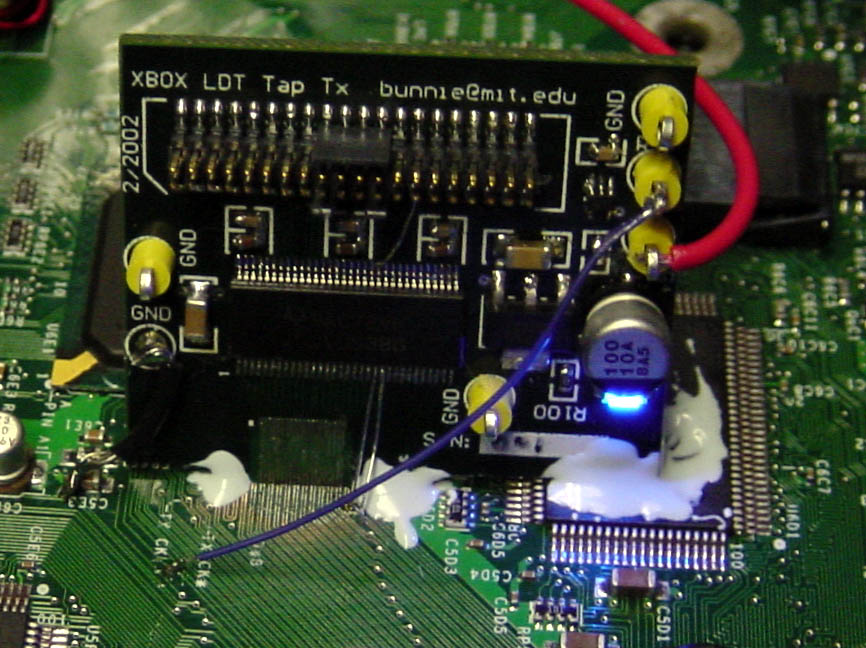
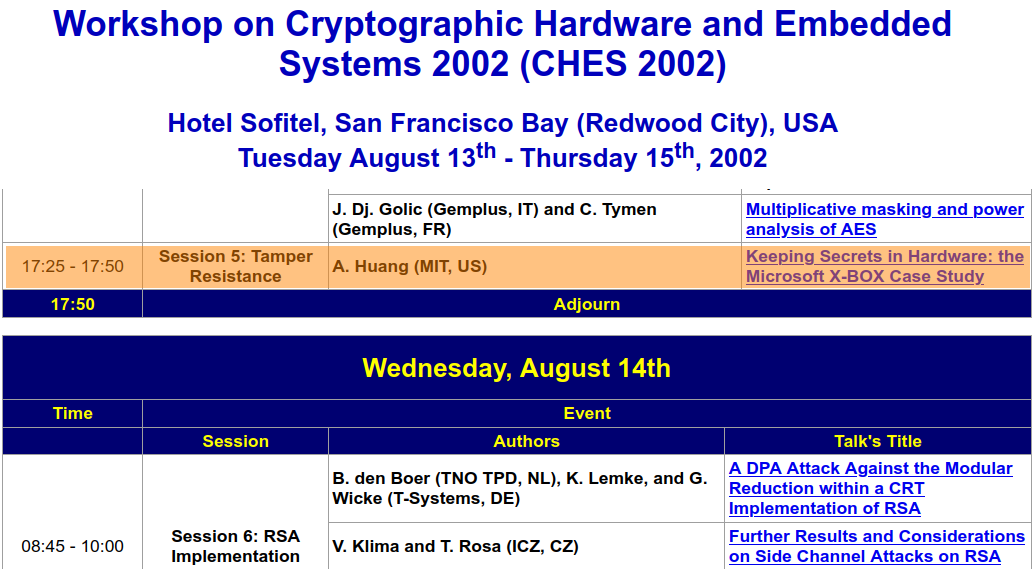
- "Accidentally" broke the DRM on Microsoft's Xbox: shared secret AES key extracted by bus sniffing
- Microsoft was not happy...
- Thank you to the CHES community for accepting my effort, even though I was a total outsider!
- The talk saved me a lawsuit and earned me my degree!
Grad Student v. Microsoft:
A Life Lesson
- Have nothing to lose
- Lose nothing
Contrast: Chip Makers
- Chip makers have a lot to lose
- Mask cost for 22nm tape out: $1-2MM
- + Tools, staff, IP: $10-20MM
- Chip teams are risk-averse
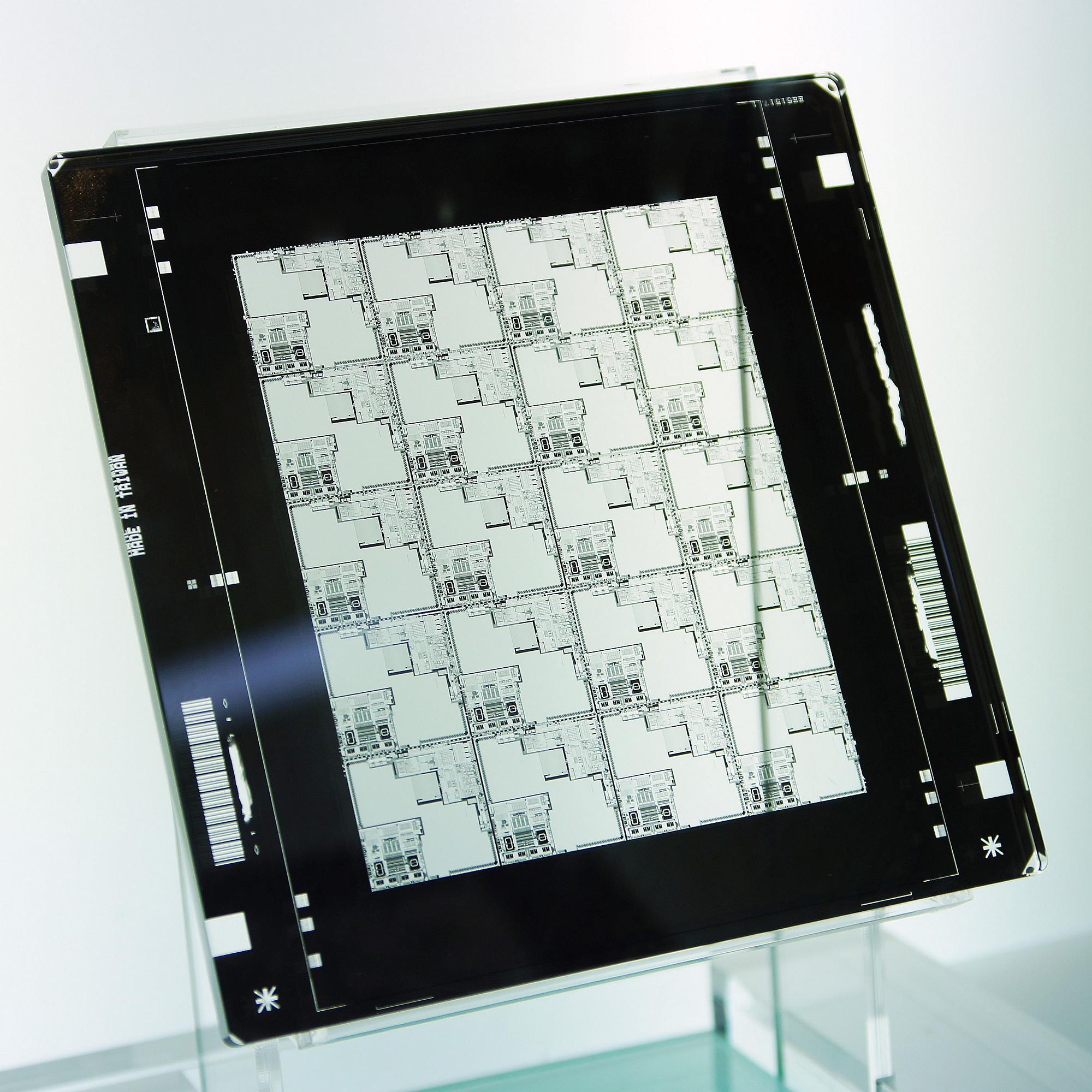
By Peellden - Own work, CC BY-SA 3.0, commons.wikimedia.org
Secure MCU Problem Statement:
$20MM Secure Chip versus This Guy
Exhibit A:
Andrew Zonenberg
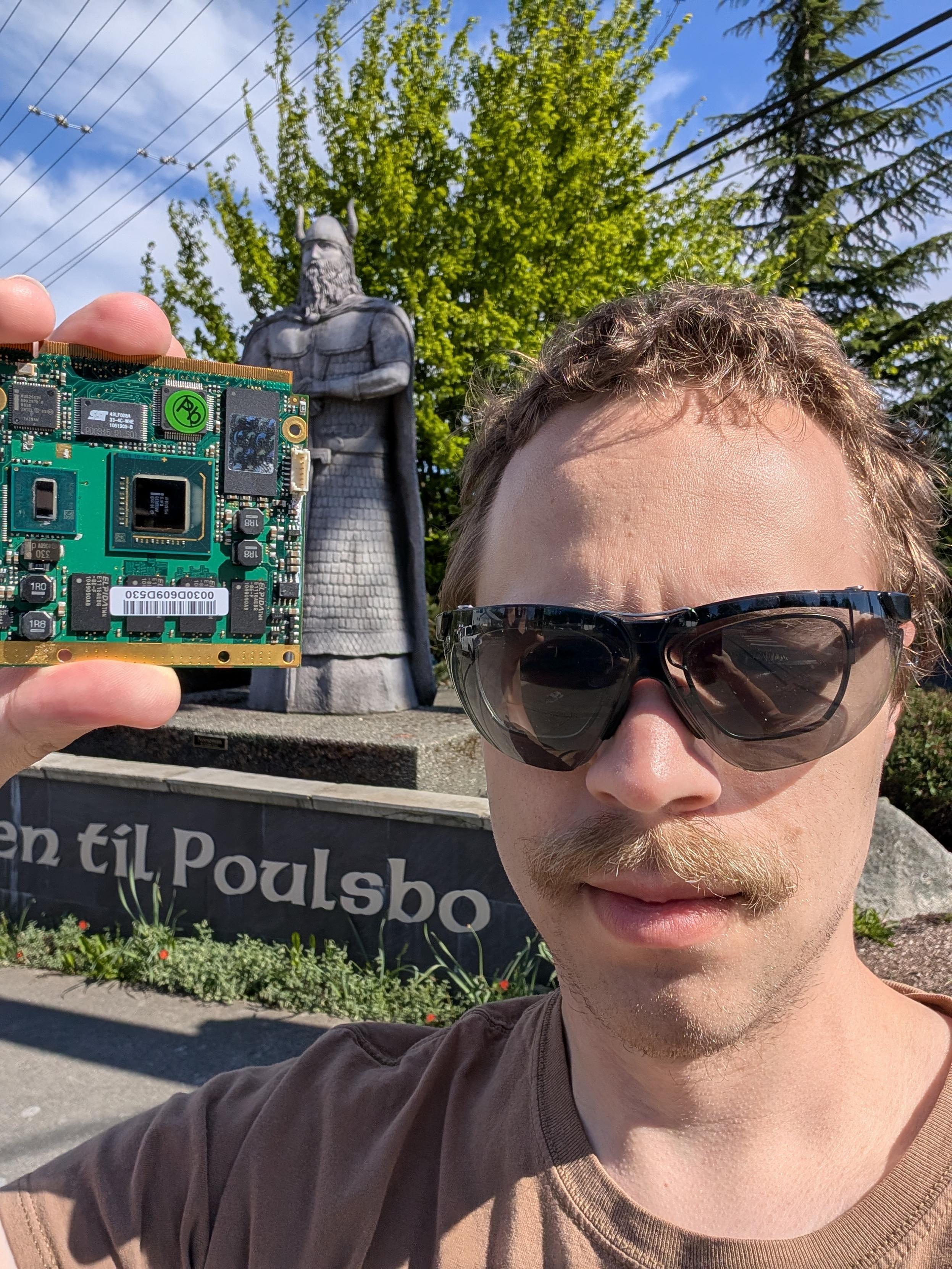
https://ioc.exchange/@azonenberg
FIBs For Fun
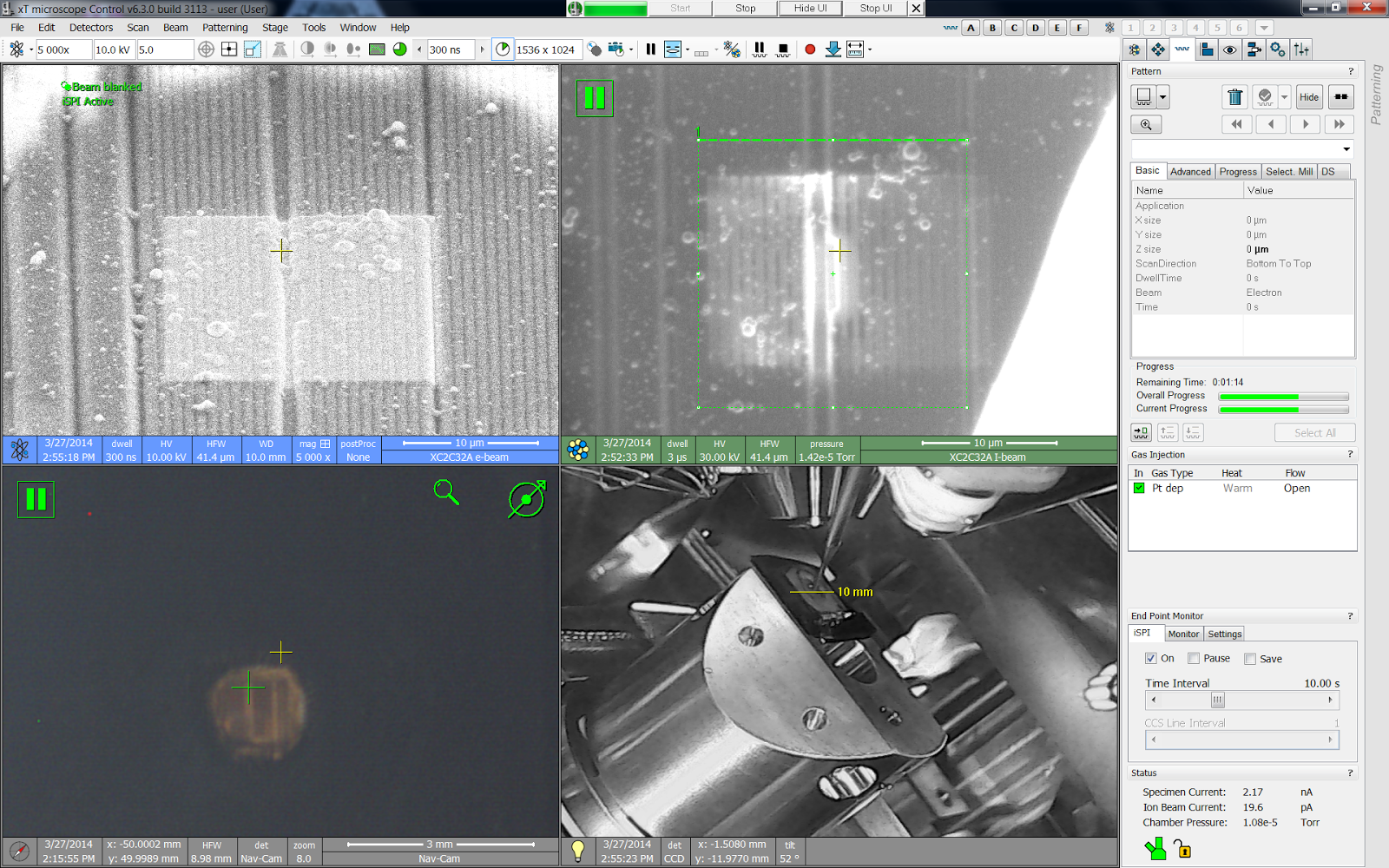
https://siliconexposed.blogspot.com/2014/03/getting-my-feet-wet-with-invasive_31.html
Cut...
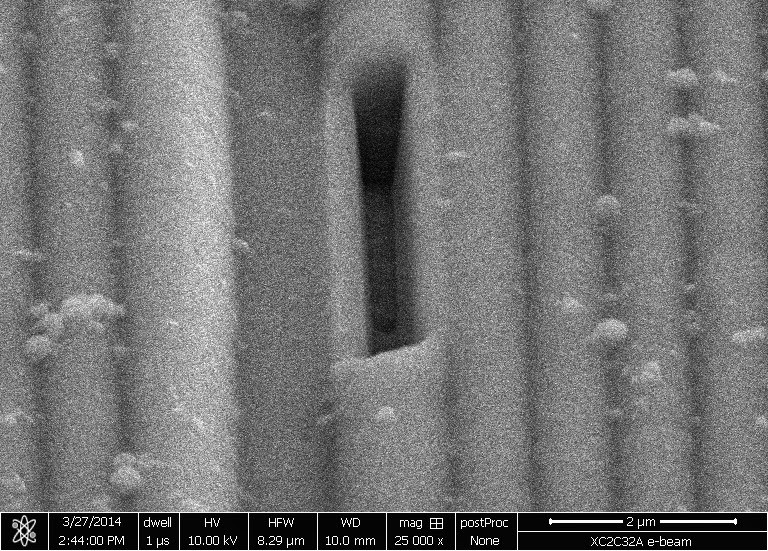
https://ioc.exchange/@azonenberg
...and Jumper!
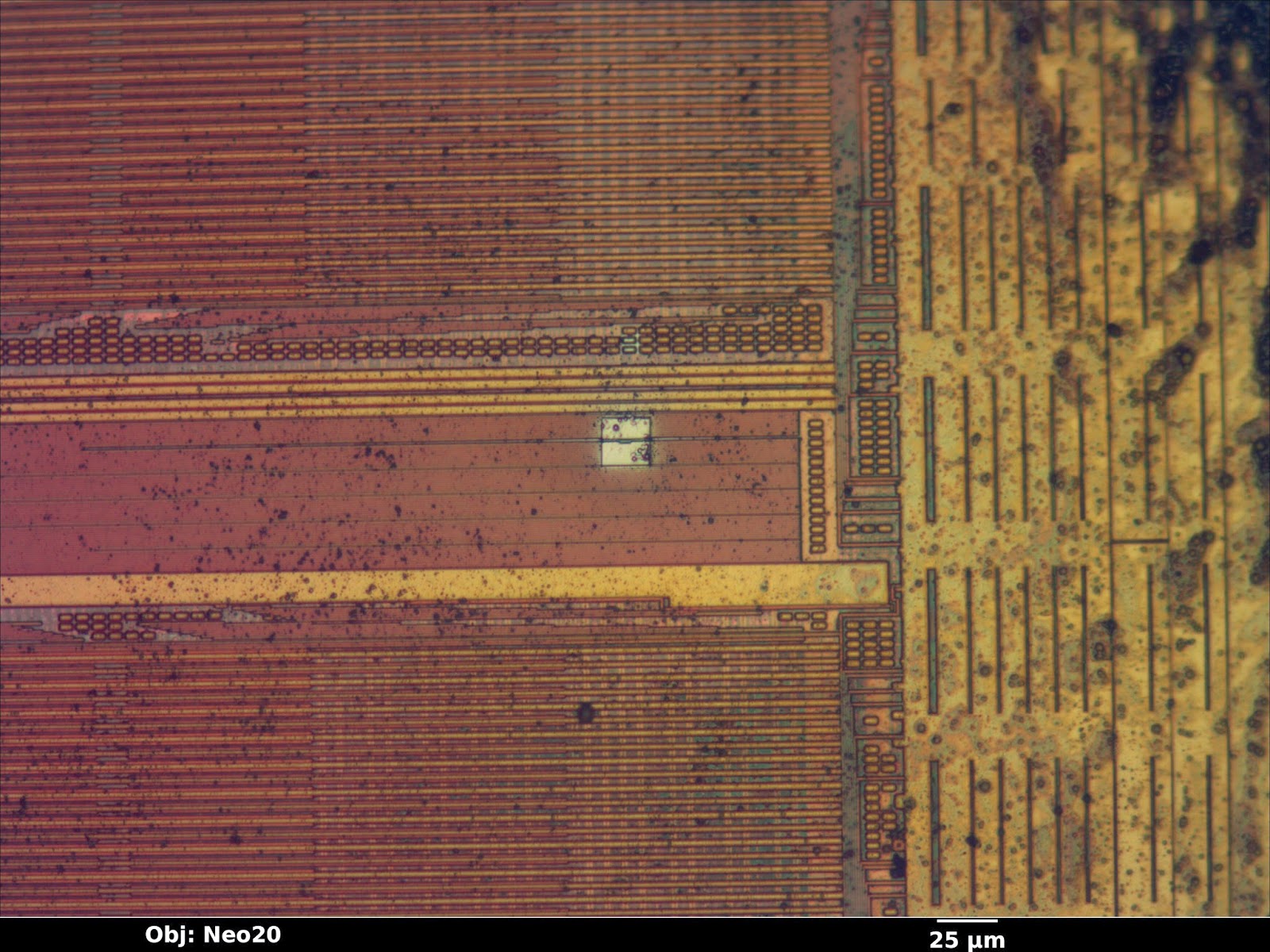
https://ioc.exchange/@azonenberg
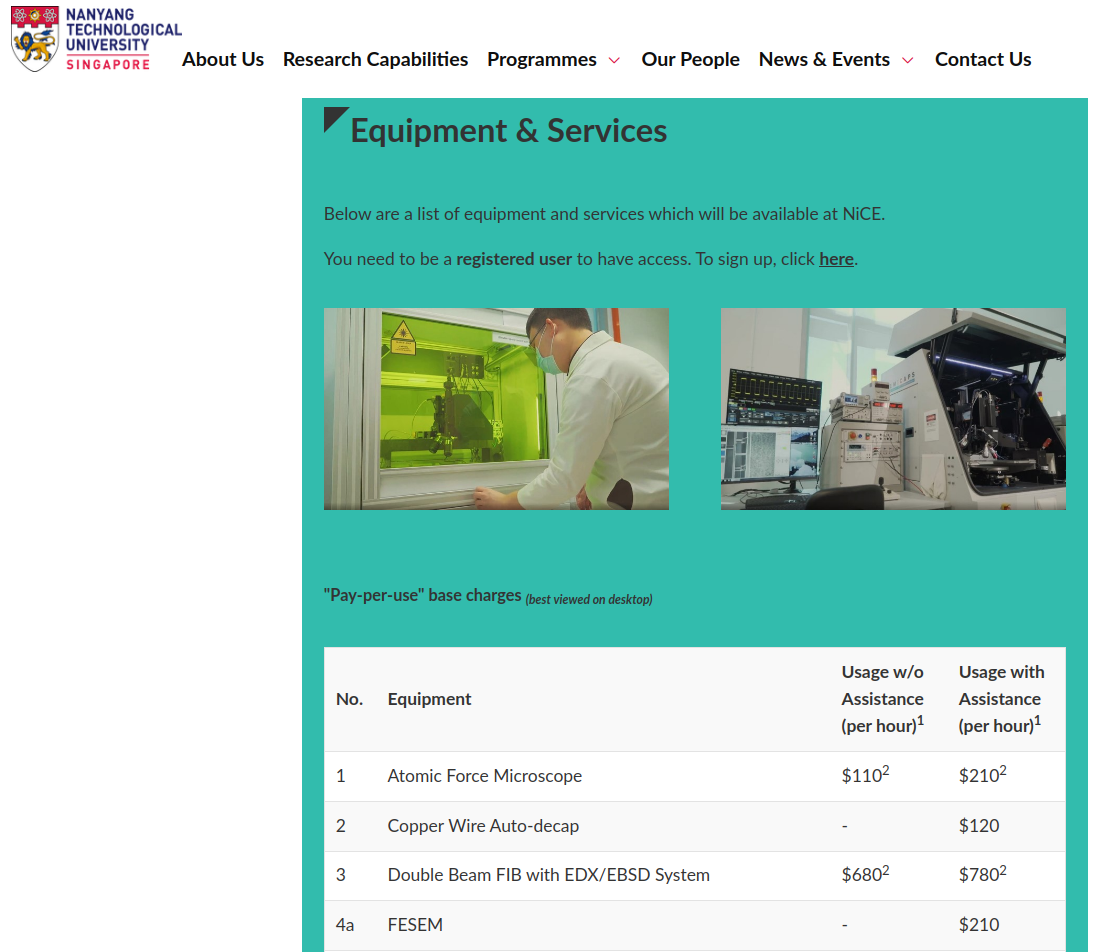
Barrier to Attack: Much Less than $20MM
https://www.ntu.edu.sg/nice/research-capabilities
(Google for "nice lab NTU")
Knowing where to FIB is the question
Why This Scares Chip Makers:
Marketing
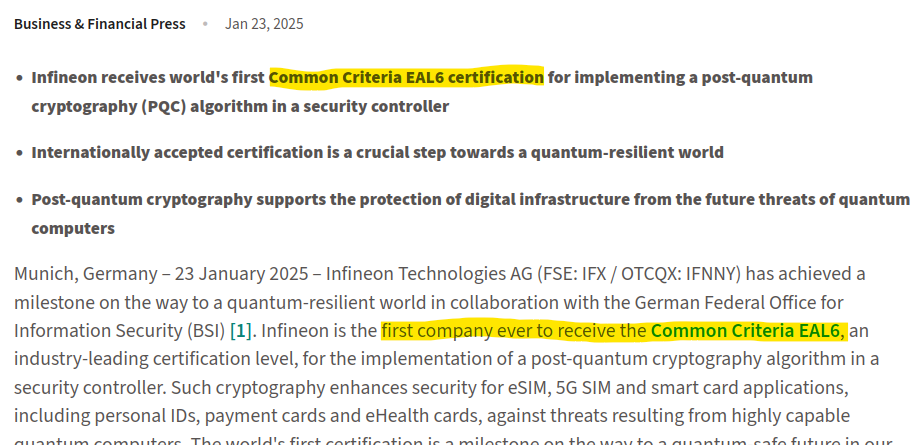
- Simple "number goes up" metric used to sell security
Review: EAL Attack Potential Scoring
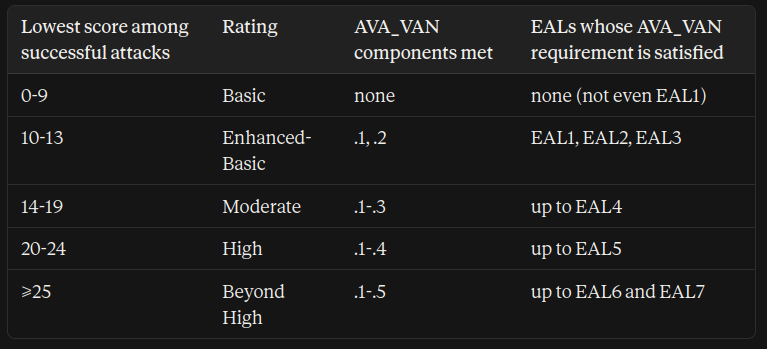
Review: EAL Attack Potential Scoring
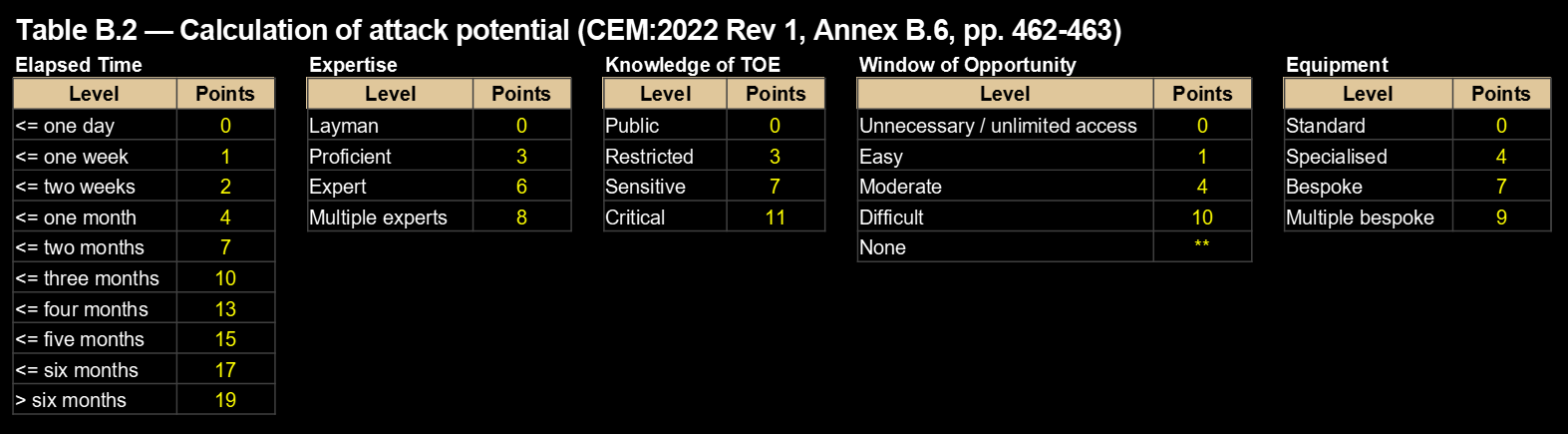
The "Cost" of Openness
"Knowledge of TOE (Target of Evaluation)"
(11 points "lost" out of 25 for public disclosure)
>
- Multiple experts
- "3 months" elapsed time
- "Multiple bespoke" equipment
- The most difficult window of opportunity
- EAL1
Fictional Example
- Test mode back door register "accidentally" left into design
- Gated with a 256-bit fixed value
- Hidden in RTL, compiled into standard cells, obfuscated with e.g. logic lock
- But! Source code, mask set are "critical" secrets
The Boardroom Calculus
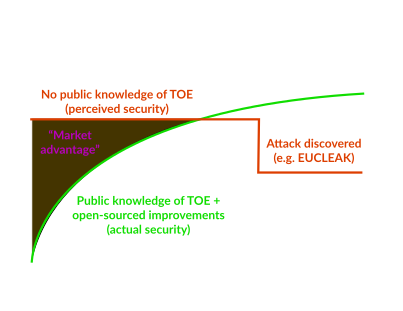
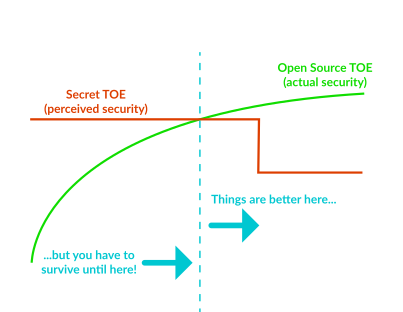
- Even though public review may eventually lead to a better product...
- ...secrecy could "save" your EAL rating
- No short-term upside to open sourcing the design
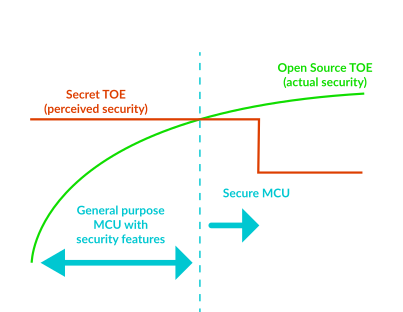
- Observation: secret targets have a decreasing perception over time, whereas open source targets may improve over time
But What of Kerckhoffs's Principle?


- "Design systems with the assumption that the enemy will immediately gain full familiarity with the design"
- ...until things get expensive: then, it's OK to pretend we can keep design secrets⁈
Three Can Keep a Secret, if Two are Dead
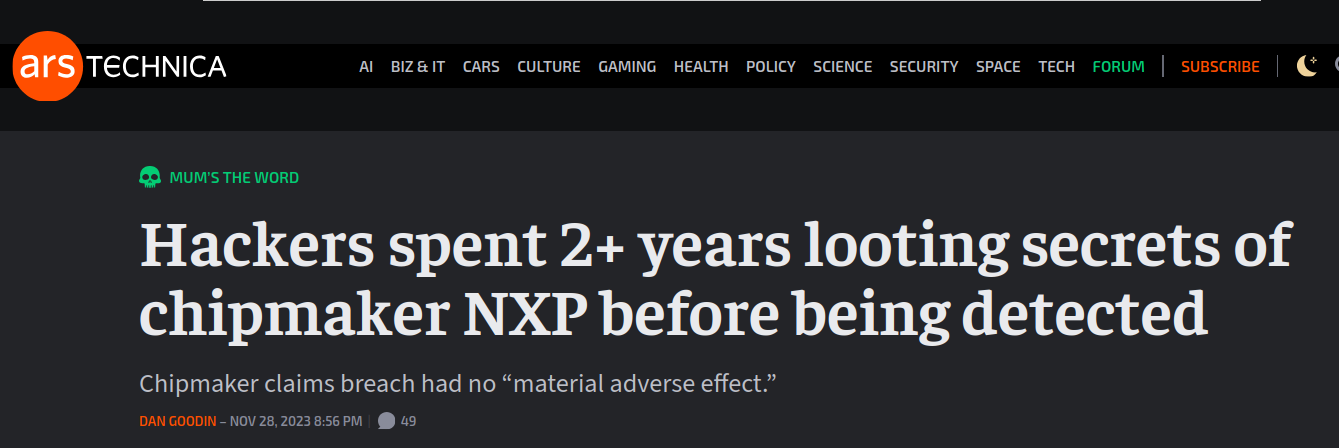
- Chip designs & IP "looted" in the attack
- NXP makes EAL6+ rated products - no rating adjustments after the attack (afaik)
- Shouldn't we assume "adversaries" now have the design source?
- Either they could just publish the design source and have no rating impact...
- ...or is the rating process a sham?
Also: Machines Have Gotten Really Good at Reverse Engineering
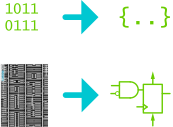
- Binaries can be read almost as source code
- Automated circuit analysis is not far behind
- Previous "elapsed time" assessments may no longer be accurate
Status Quo: Worst of Both Worlds
- Customers get a black box with no way to verify it
- Adversaries might have more knowledge of attack vectors than customers
- Disclosure of back doors can be compelled through legal processes
- The list of adversaries should also include your own governments
- All trust stems from literally the label on the box
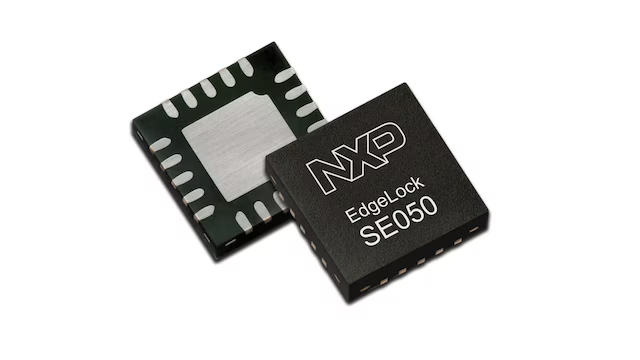
I Believe We Can Do Better, But How To Get There?
Recalling a Lesson Learned
- Have nothing to lose
- Lose nothing
Applying the Lesson
- Don't be a "secure MCU"
- Be a general-purpose MCU that happens to have secure MCU features
- Transistors are cheap
- Certification is expensive
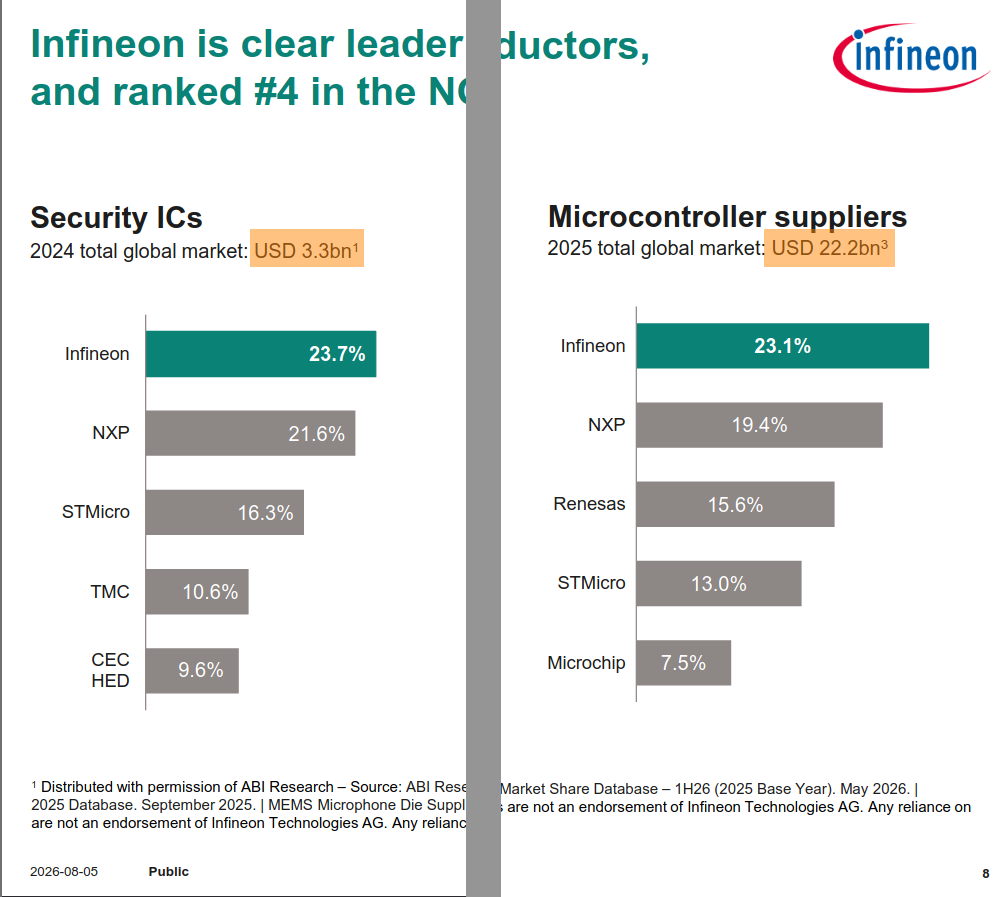
https://www.infineon.com/assets/row/public/documents/corporate/company/fy2026-q3-web-en.pdf
Focus on Transferable, Cross-Generational
Software Improvements
- Delegate mitigations as much as possible to software
- Job #1: Improve code quality
- Attack practitioners rarely use sidechannel attacks, because there are so many software bugs
- With many eyeballs all bugs are shallow
- Rapidly adopt & deploy community improvements
But Exactly How?
My Strategy:
"Hitchhike" Open Source Cores
on a Commercial Tape-Out
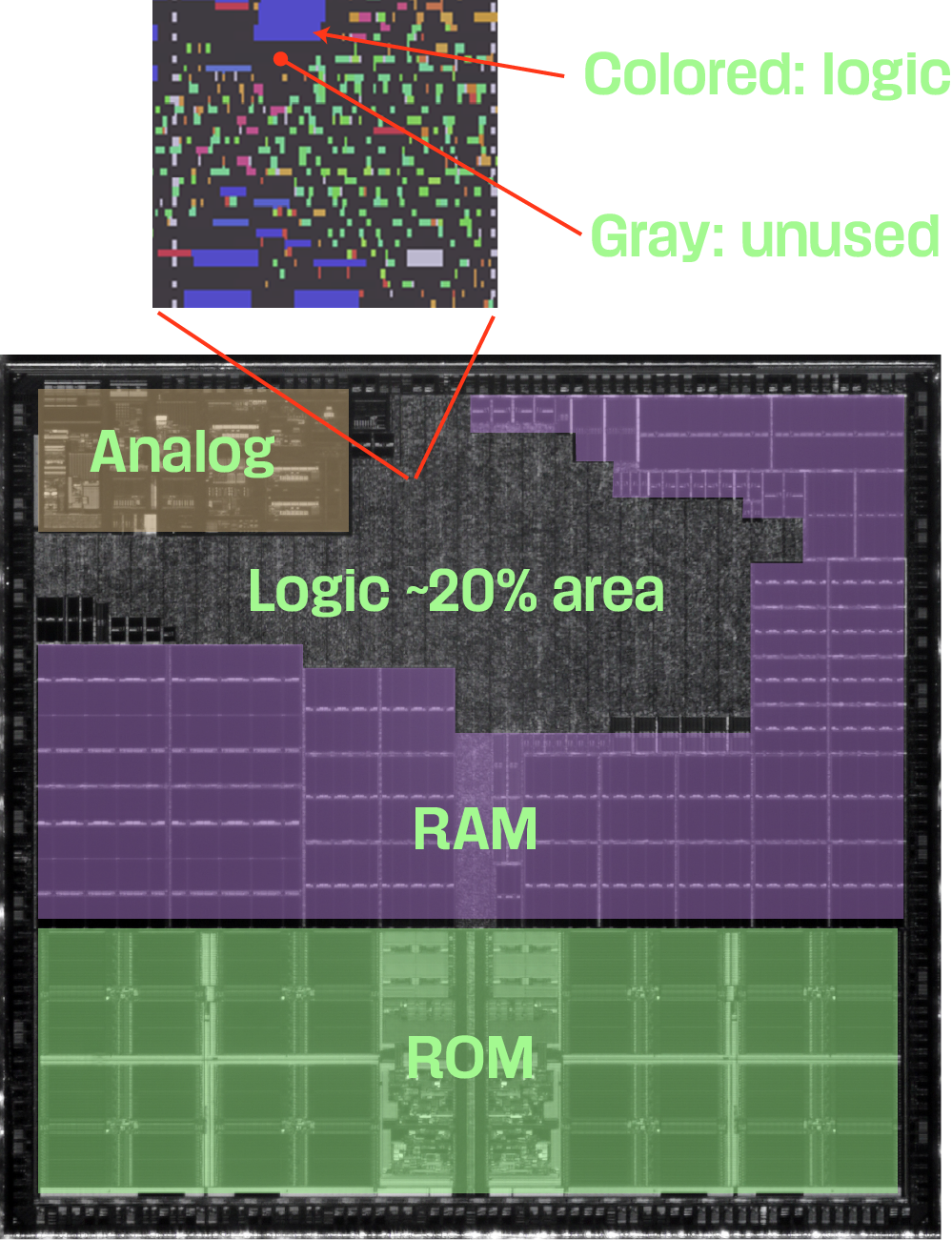
Review: Logic Density in Small-Node Chips
- Size of chip is set primarily by:
- Memory
- I/O perimeter
- Logic is like a "gas",
it expands to fill the available space- At a detail level, it can be quite sparse
Review: Typical SoC Block Diagram
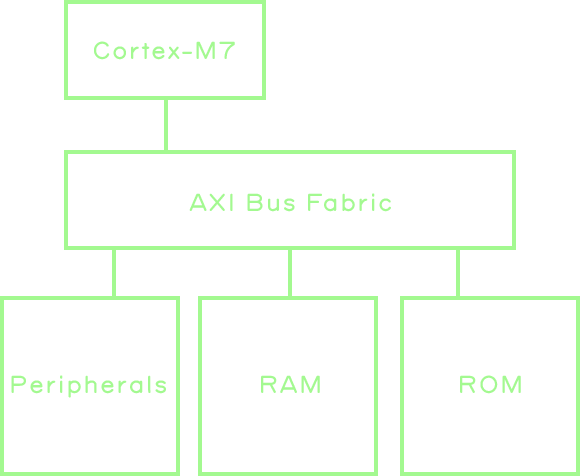
Can We...Just Add a RISC-V Core?
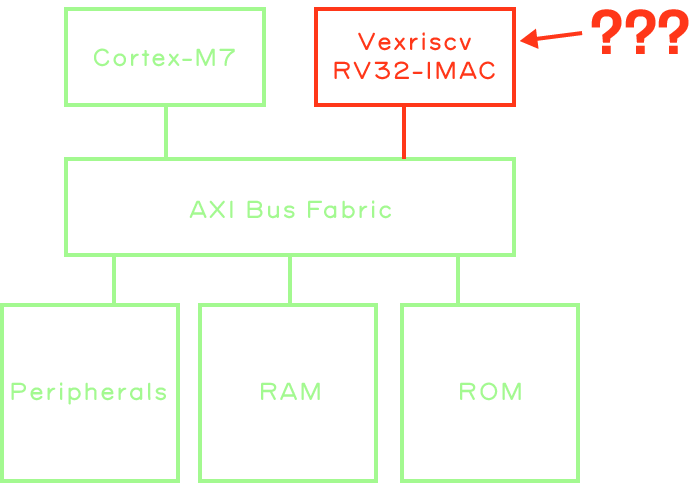
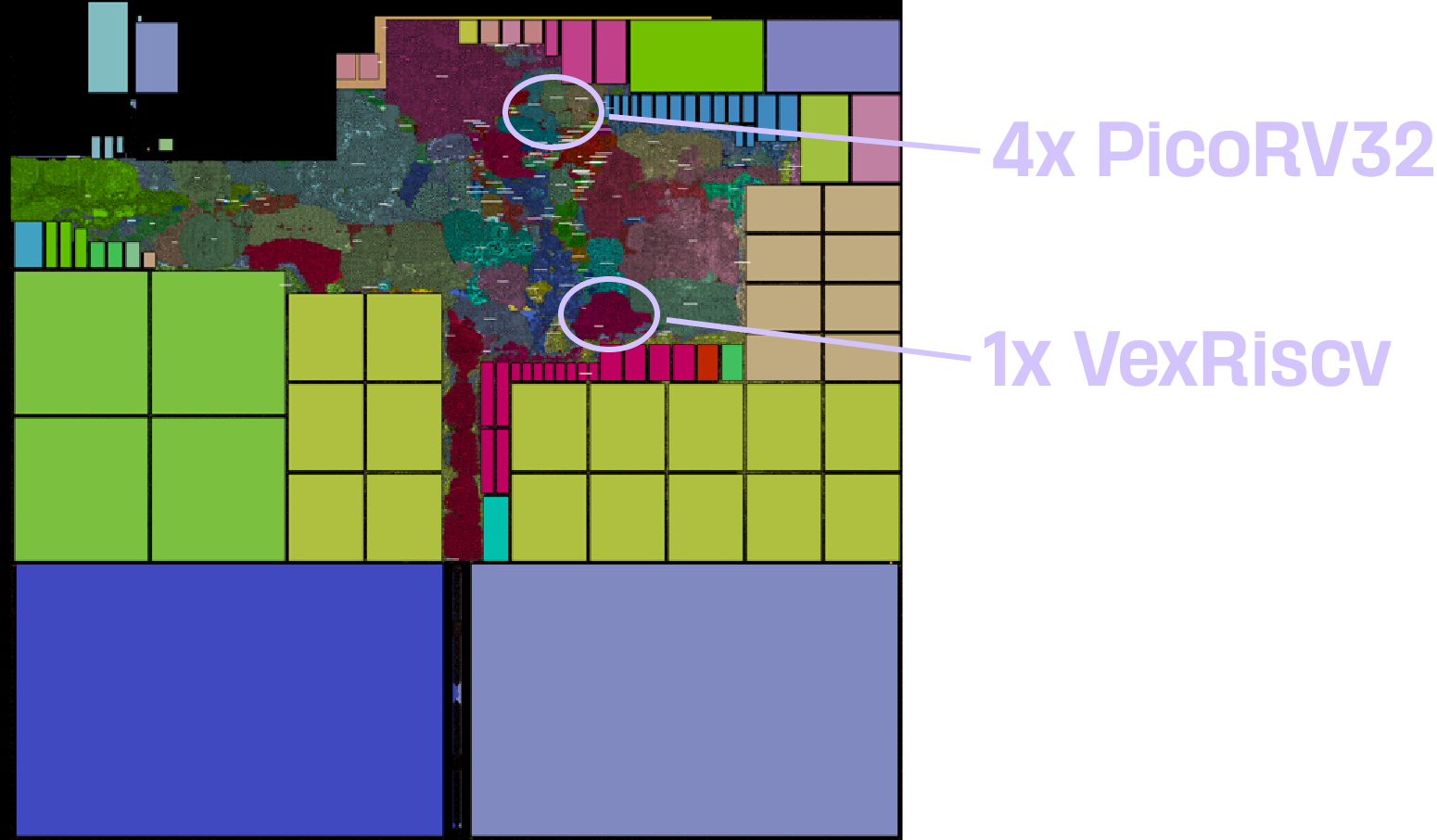
Yes We Can, and It's Free!
- <2% die area
- 1x VexRiscv with MMU
- 4x PicoRV
- No extra cost to tape-out
- Logic is sparse
- Could fit more logic!
- No royalty
Okay, So...Hitchhiking is Theoretically Possible But...
But Who Would Give THIS Guy A Ride?

Fig 1. "Trouble"
Luckily, Crossbar was already heading that way,
and they stopped and asked me for
directions...
Result: Partially-Open RTL SoC
For High Assurance Applications
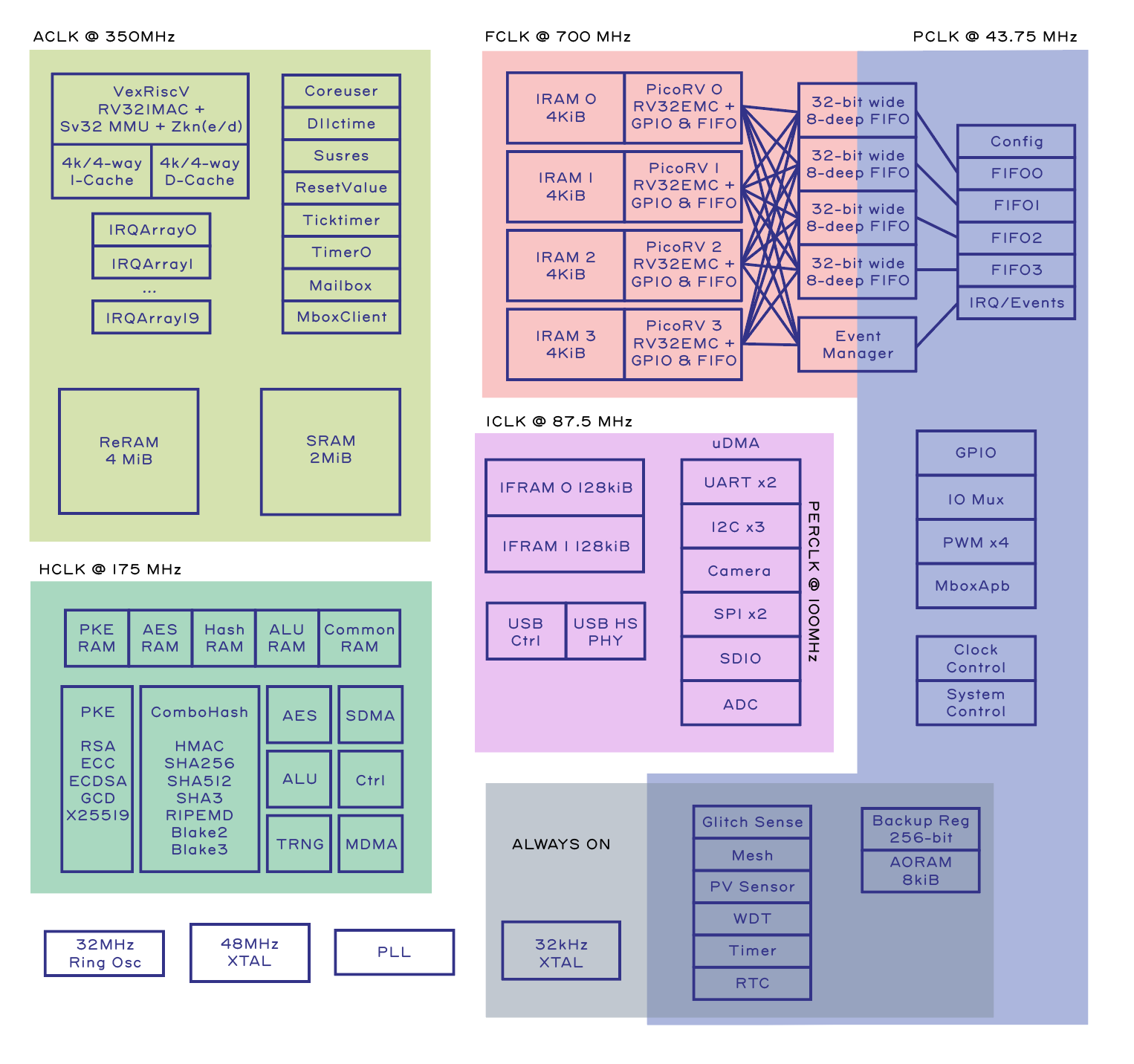
- Baochip BAO1X2S4F (Baochip-1x for short)
- "Hitchhiking" on Crossbar's tape-out
- Five open-source CPUs
- VexRiscv RV32IMAC+MMU @ 350MHz
- 4x PicoRV I/O Engine ("BIO") @ 700MHz
- 4MiB on-chip ROM ("RRAM")
- 2MiB on-chip SRAM
- Cryptographic accelerators, TRNG, secure mesh, attack sensors
- USB HS, camera, I2C, SPI, UART, etc.
- Five open-source CPUs
22nm: Room for Multiple Cryptographic Implementations
- Hardware AES has only basic mitigations
- Explicitly not targeting top-end side channel performance
- Included mostly because "transistors are free"
- 350MHz CPU core can do soft AES
- Algorithmic mitigations in software
- Also, optional clock skipping feature
- "Fast enough" in practice
Current Status of Baochip-1x
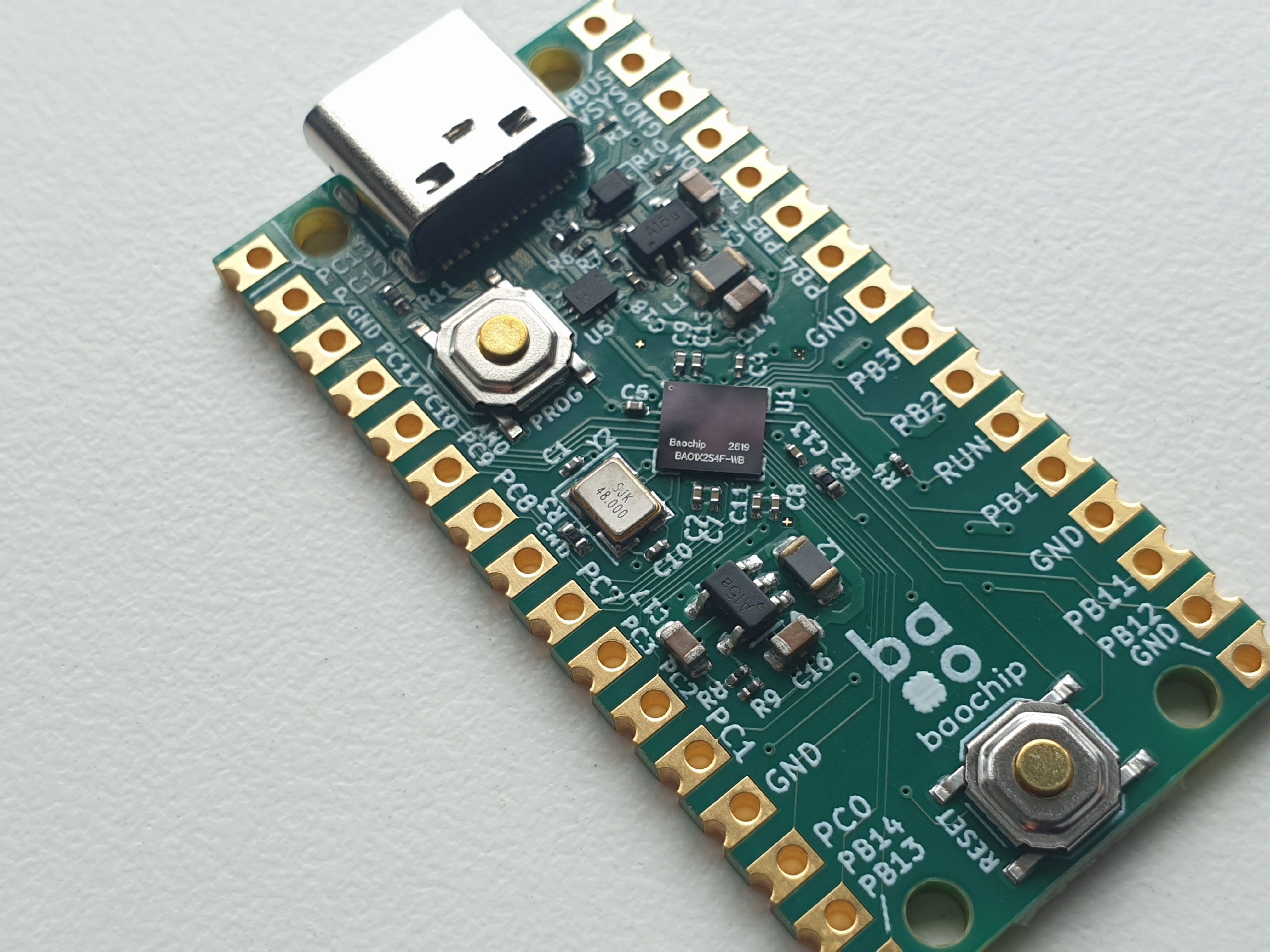
- Started a "small organization" called Baochip to manufacture and distribute the Baochip-1x
- "Dabao" evaluation board is available via CrowdSupply
- Baochip-1x was featured in Defcon 34 conference badge
- Chips should be in distribution (Digi-Key, etc.) starting next month
- Can't wait to play with it? Ping me on Discord or catch me in the hallway track!
OK, But Isn't an Open TOE
Strictly Less Safe than a Closed TOE?
- I did in fact make these statements:
- Attacks are cheap
- Knowing where to attack is hard

Taking Kerckhoffs's Principle to Heart:
I Assume The Red Team Always Wins
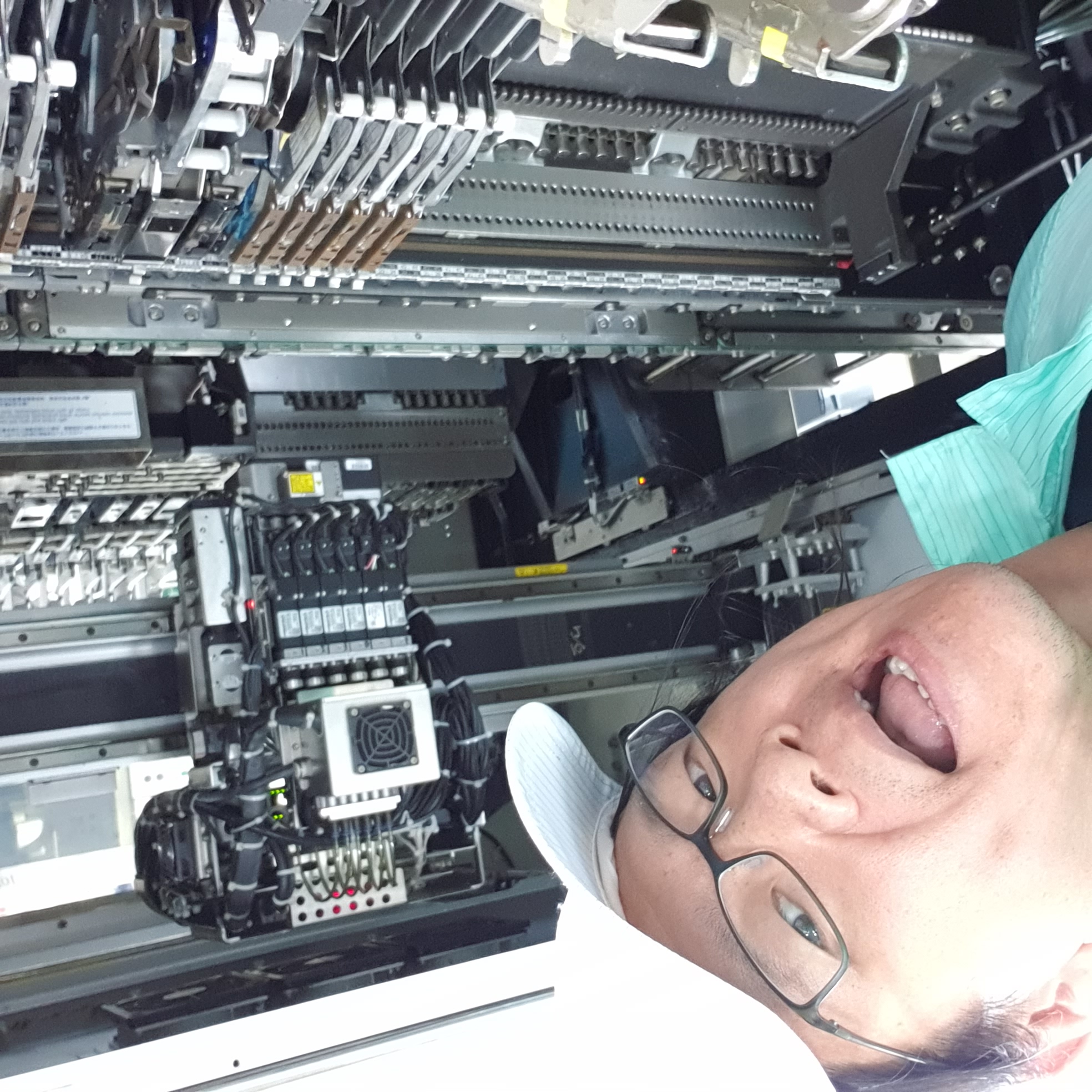
- Obfuscation is not security
- Chips will be FIB'd
- Boards will be tapped
- Supply chains will be compromised
DRM Is Not a Good Fit with Open Source
- Good. I didn't like that market anyways.
- Instead: empower ownership transfer
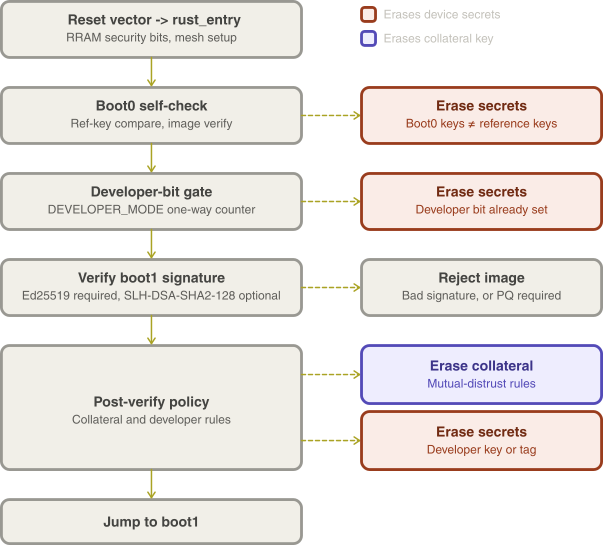
- Anyone can sign firmware with a "Developer key"
- A valid developer key signature erases secret material
- Permission-less opt-out of signed boot
- "Collateral" keys facilitate third-party secure signing
- This makes Baochip unattractive for a range of "traditional" secure MCU applications
So, what is this chip useful for?
Everyday Objects Deserve Good Cryptography, Too
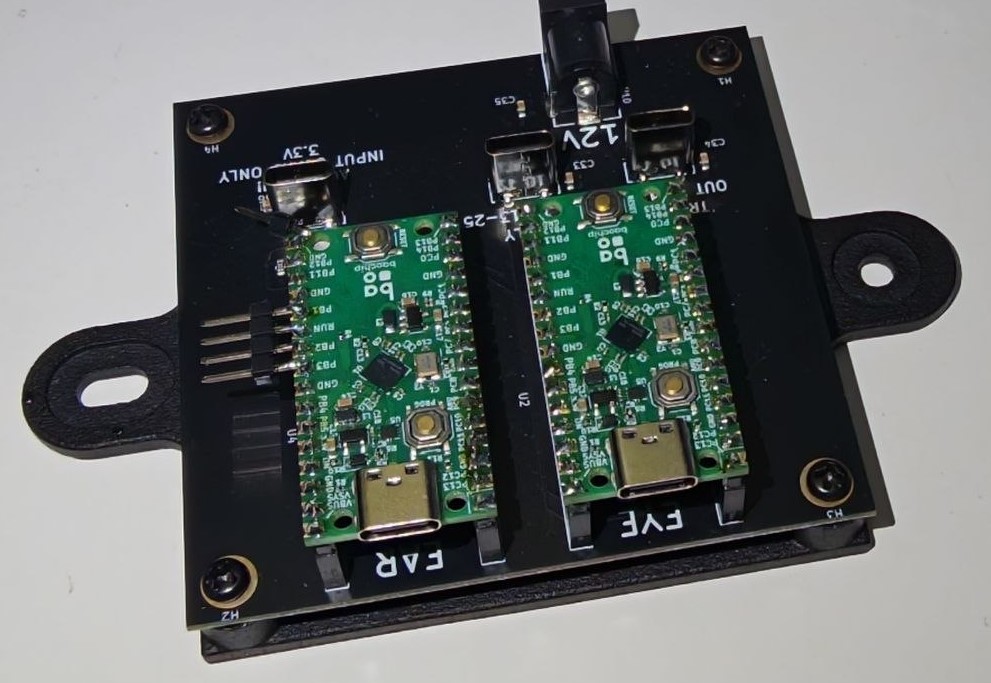
- Triangel: possibly the world's only post-quantum secured LED art
- It's open source: see https://github.com/rowr111/triangel
- Safe defaults make for better products
- See: Let's Encrypt!
- We can put good cryptography in everything
- Security should be a free default, and not a paid-premium afterthought
- Besides: general-purpose MCU market is 10x size of secure MCU market
- Could we do for IoT what Let's Encrypt did for the Web?
Supply Chains Can be Softer Targets
than Sidechannels
- A system may incorporate an EAL6+ rated chip...
- ...but how do you know for sure that the chip in your product is the correct
one?
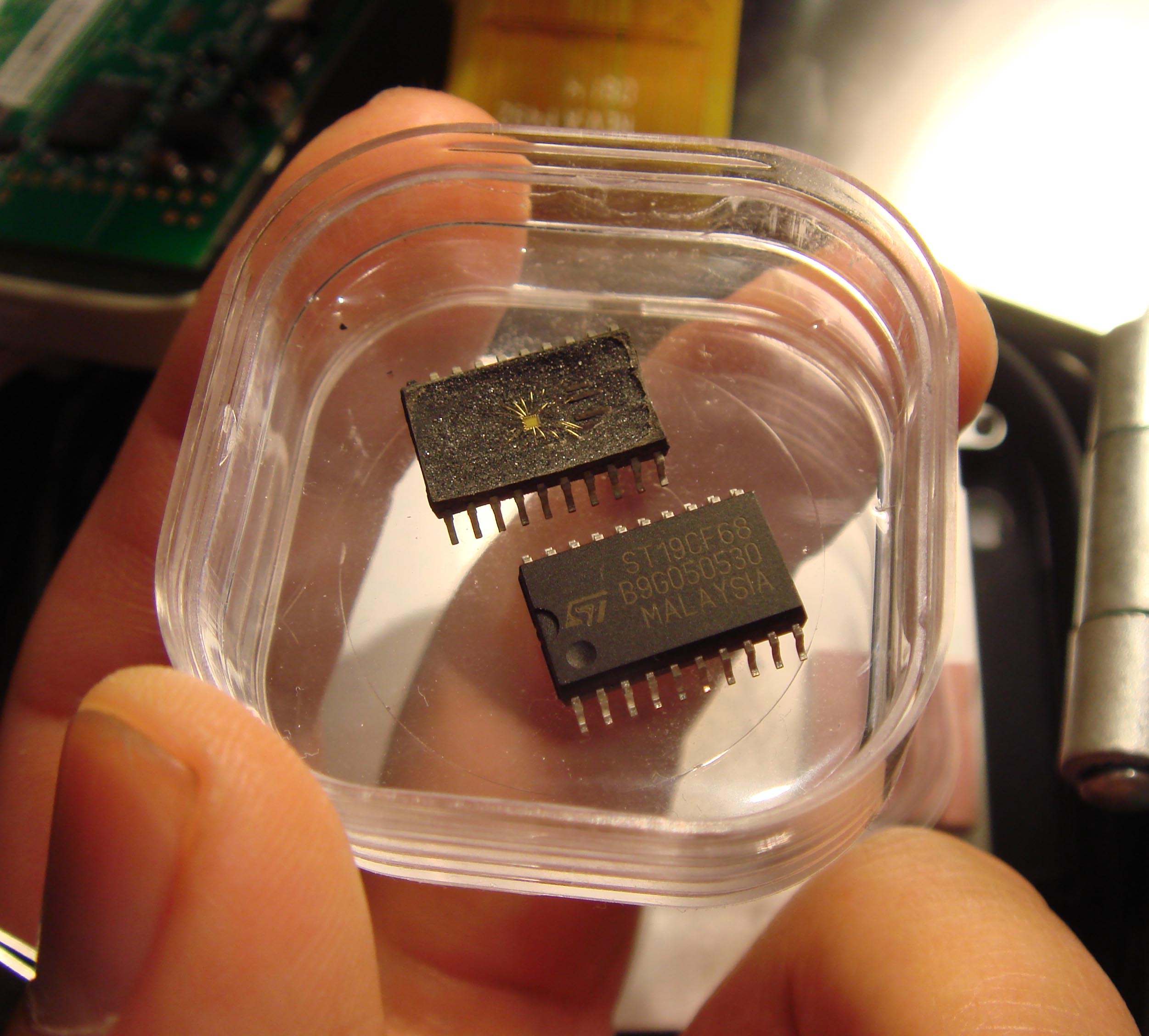
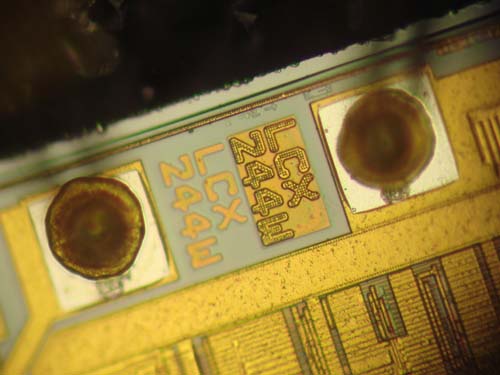
- Could be a functional emulation
- Could have a MITM chip bonded in the package
- Consider: an attacker can just buy a product on Amazon, swap out a chip, and return it!
My Proposed Solution: IRIS (Infra-Red, in situ) Imaging
- A method for inspecting certain types of chips
- After they are attached to a circuit board
- Without damage
What Types of Chips?
- Short answer: the shiny ones
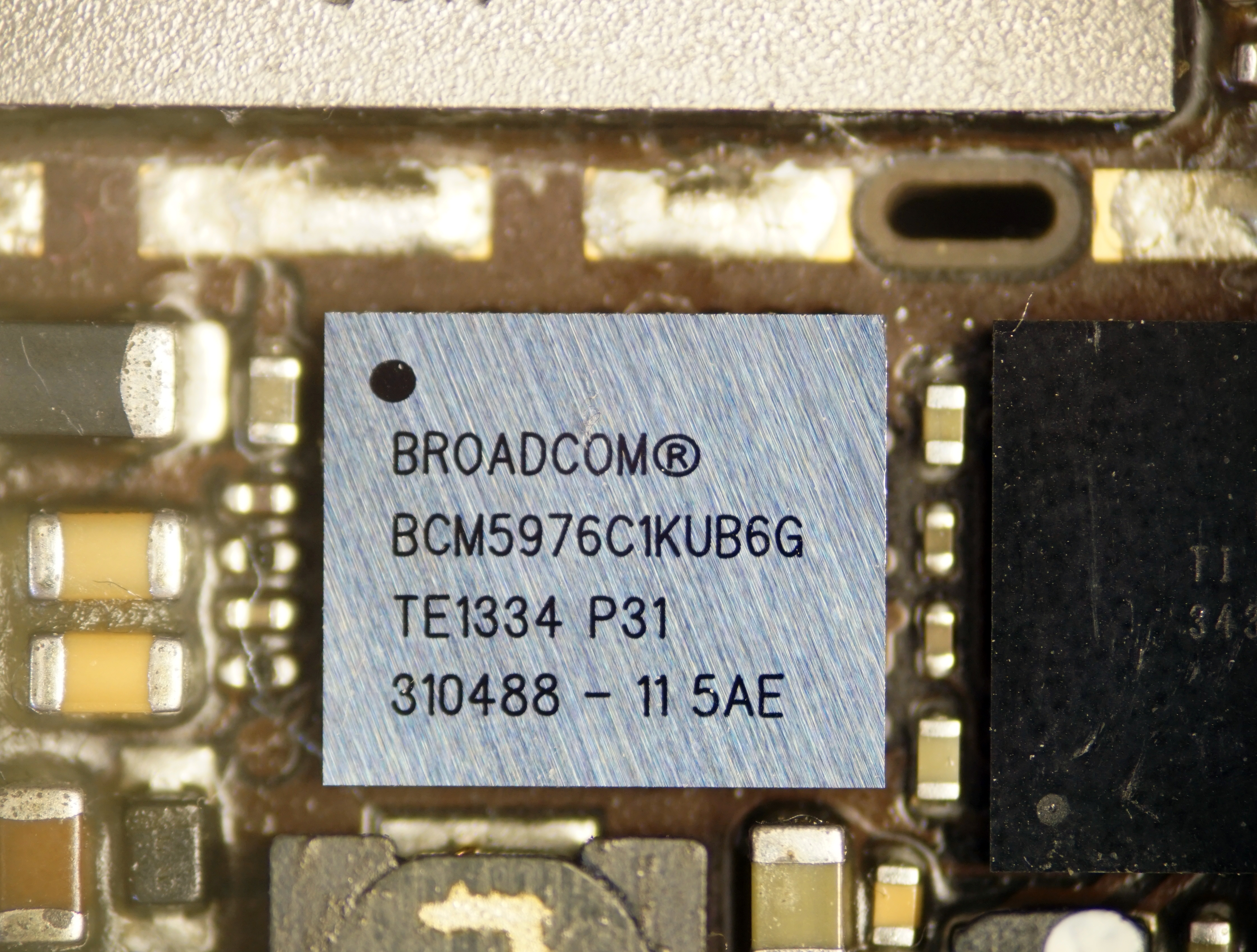
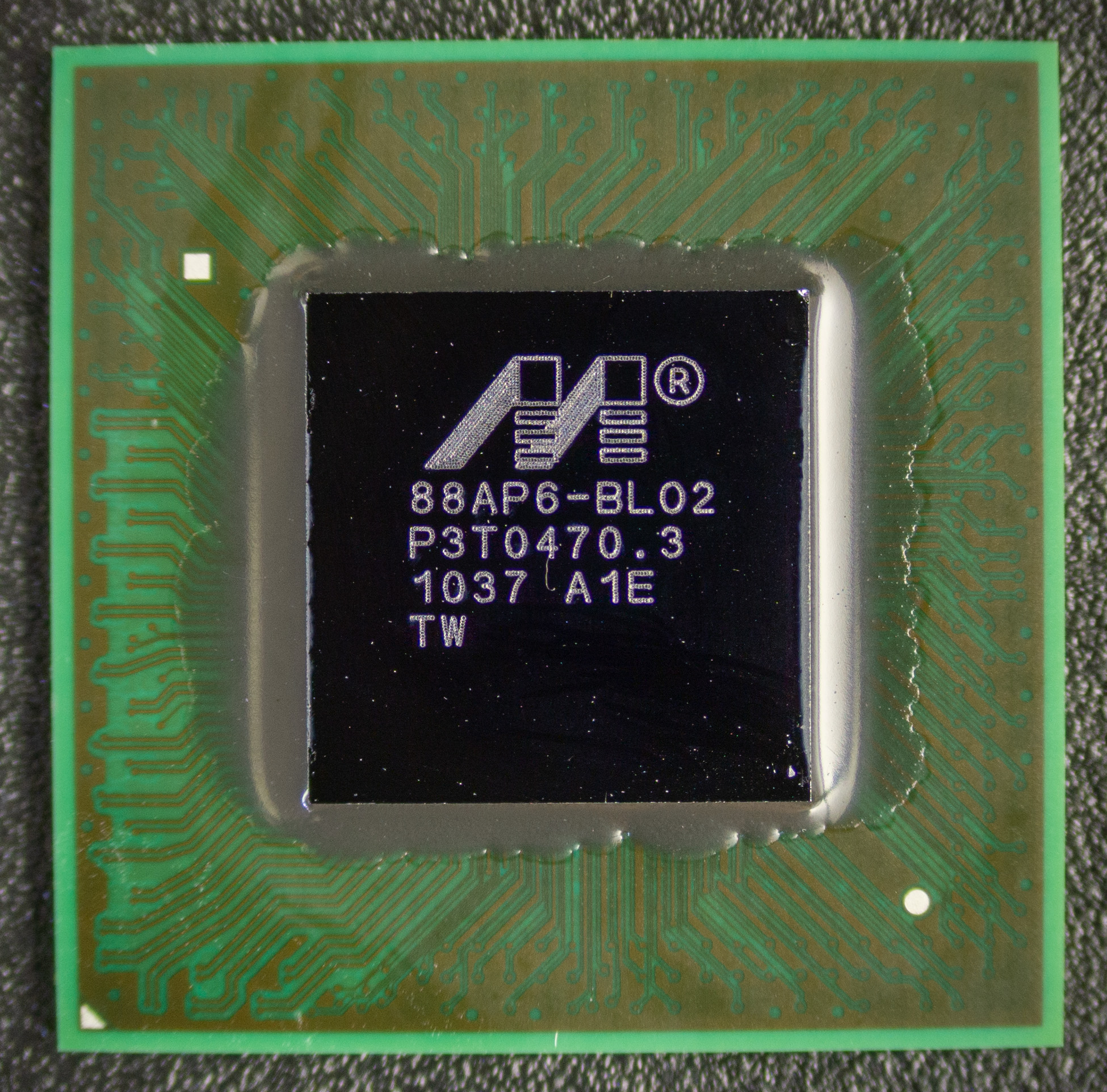
- Exposed silicon back with no film or paint applied
- Ideally polished and/or thinned
- P- (lightly) doped substrate (e.g. TSMC, not Intel)
- Does not work for chips in plastic packages
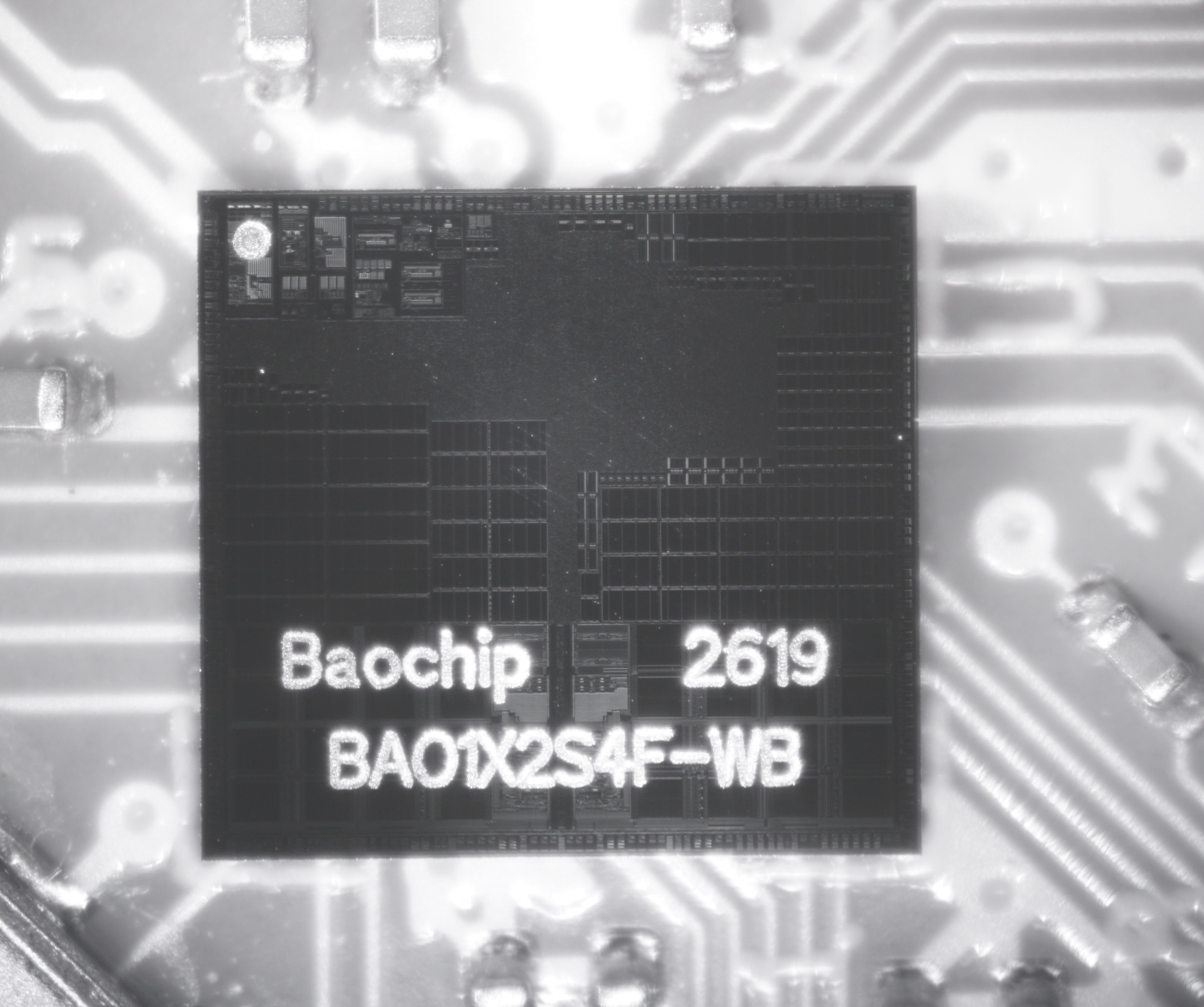
- Manufacturer must deliberately "design for inspectability"
Review: Silicon is Transparent to Infra-Red Light
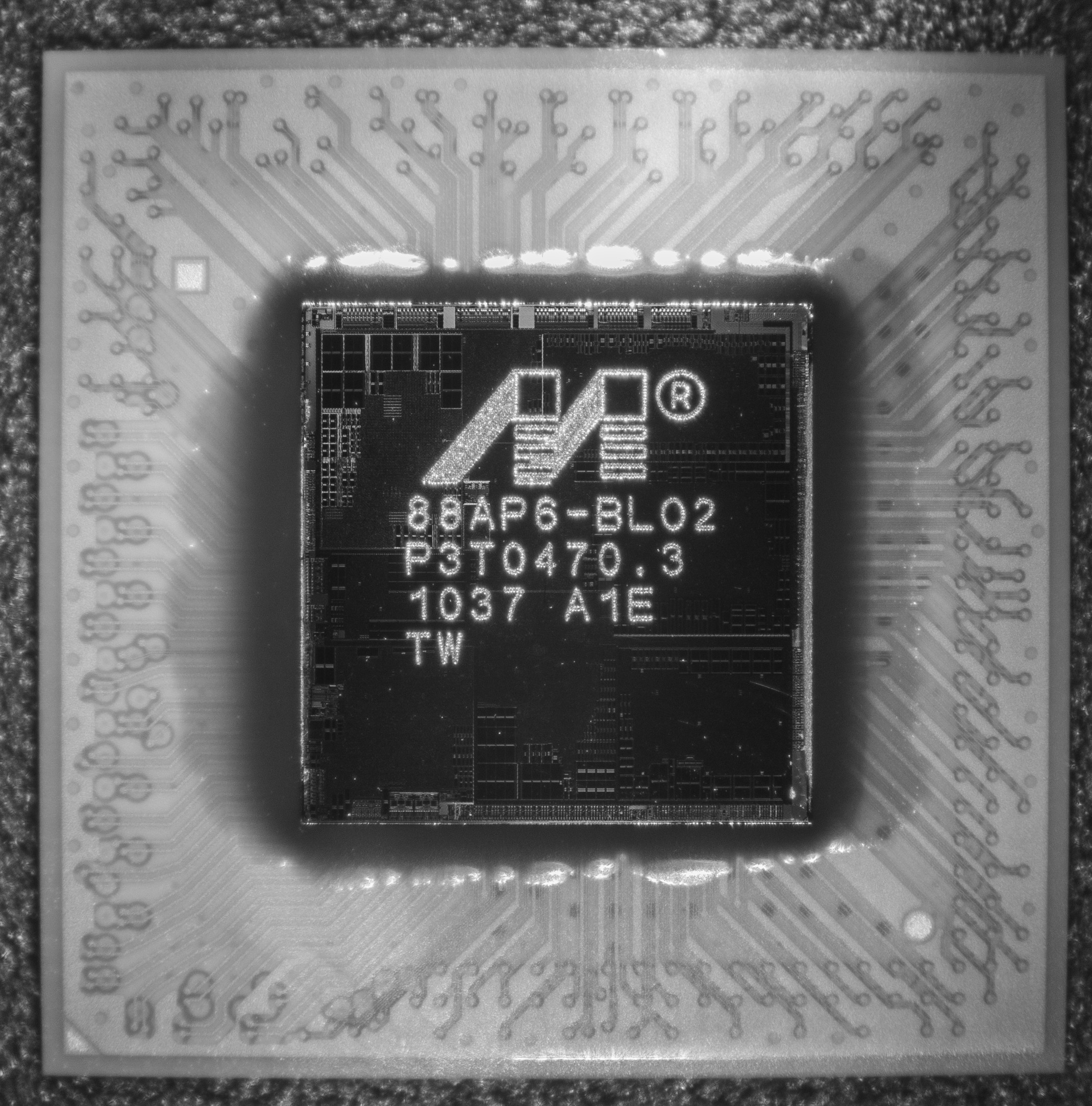
Putting it All Together: IRIS
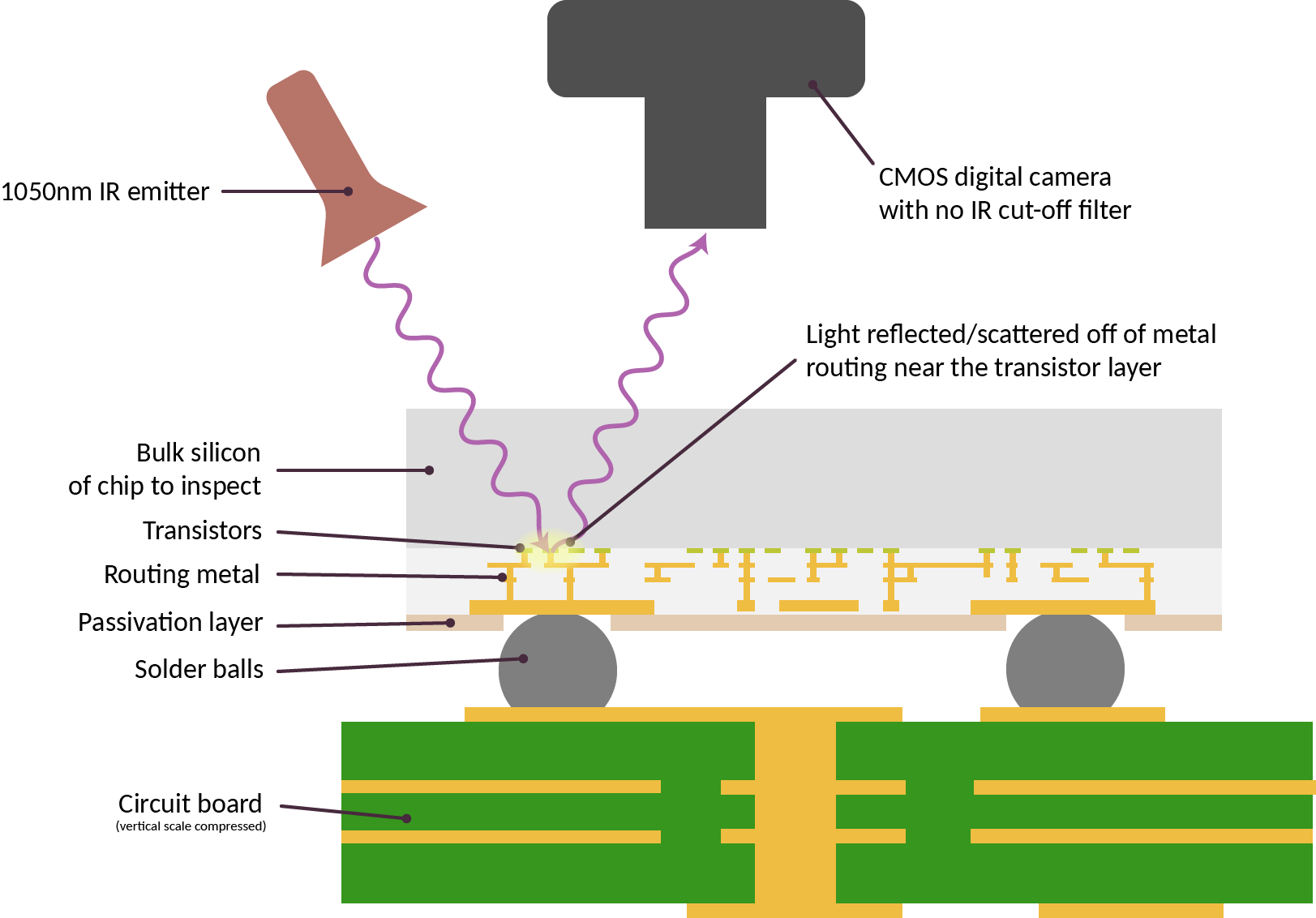
- Inspection of chips from the back side
- After they have been assembled into a product
Prior Work
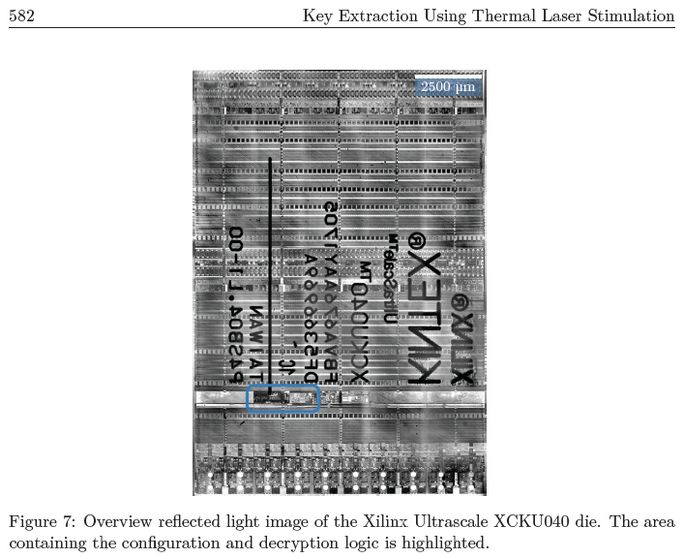
- IR backside imaging is a well-established technique
- IR laser imaging via e.g. Hamamatsu iPhemos system
- Die photography by Fritzchens Fritz
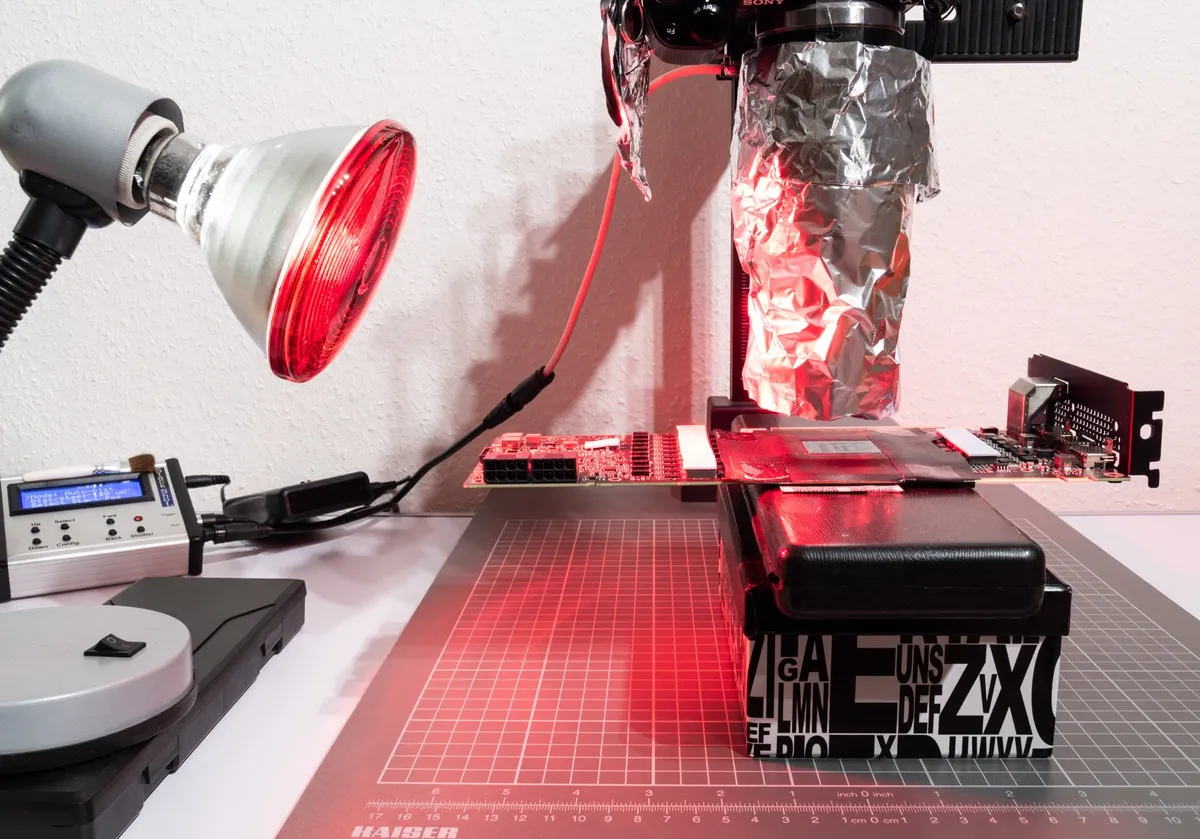
My Work
- Aimed at point-of-use inspection
- DIY-friendly, <$300 equipment cost
- Time of check vs Time of use matters:
- Sending a sample to a lab for inspection is like downloading a hash of a file
- IRIS is like downloading the file then hashing the local copy
But Photons are Big (1050nm), Transistors are 22nm!
- But photons also diffract!
- IRIS images a "hologram" of sub-wavelength features
- Rotating the light source about the imaging axis adds additional information
What IRIS Gets You at 22nm
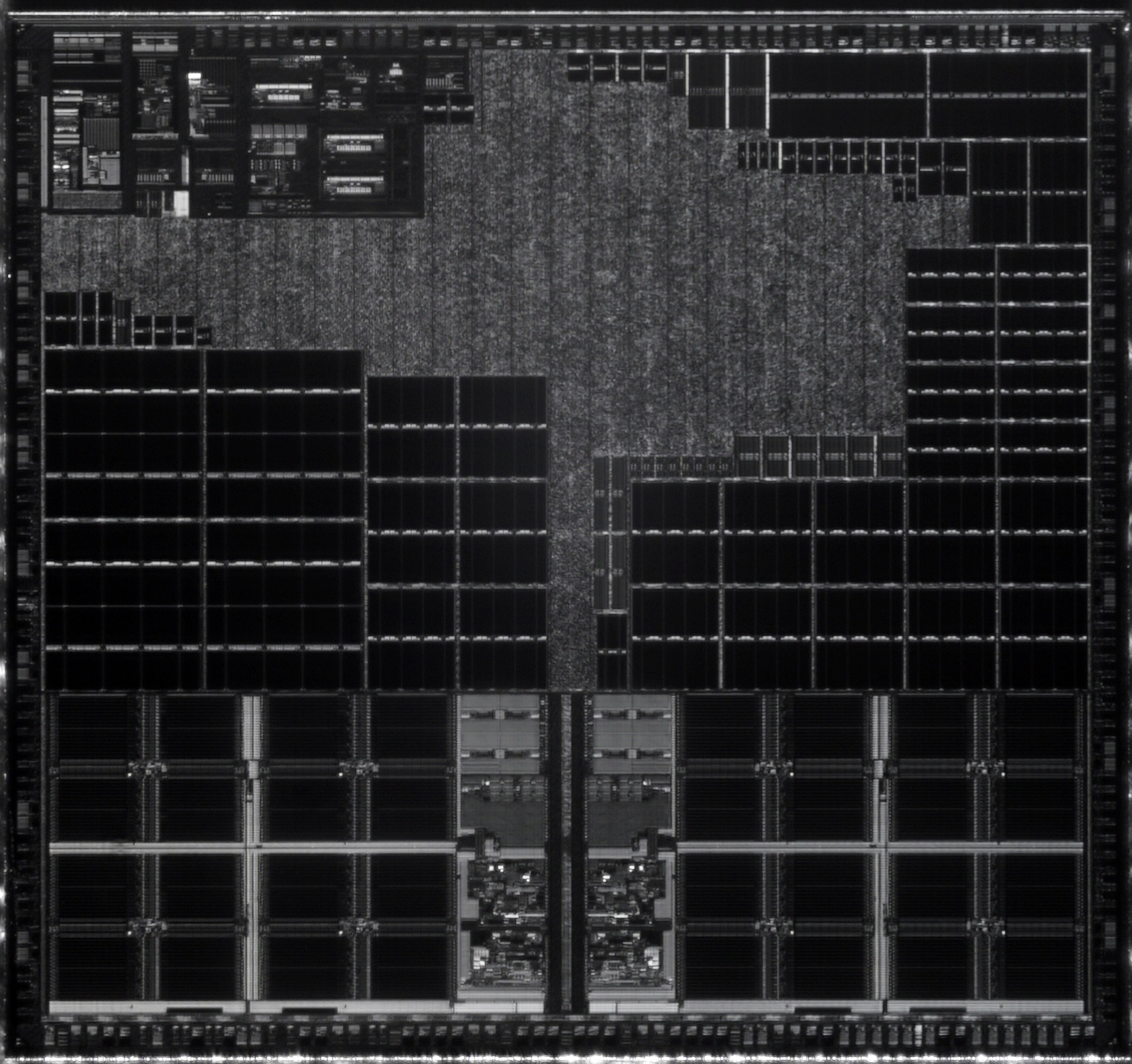
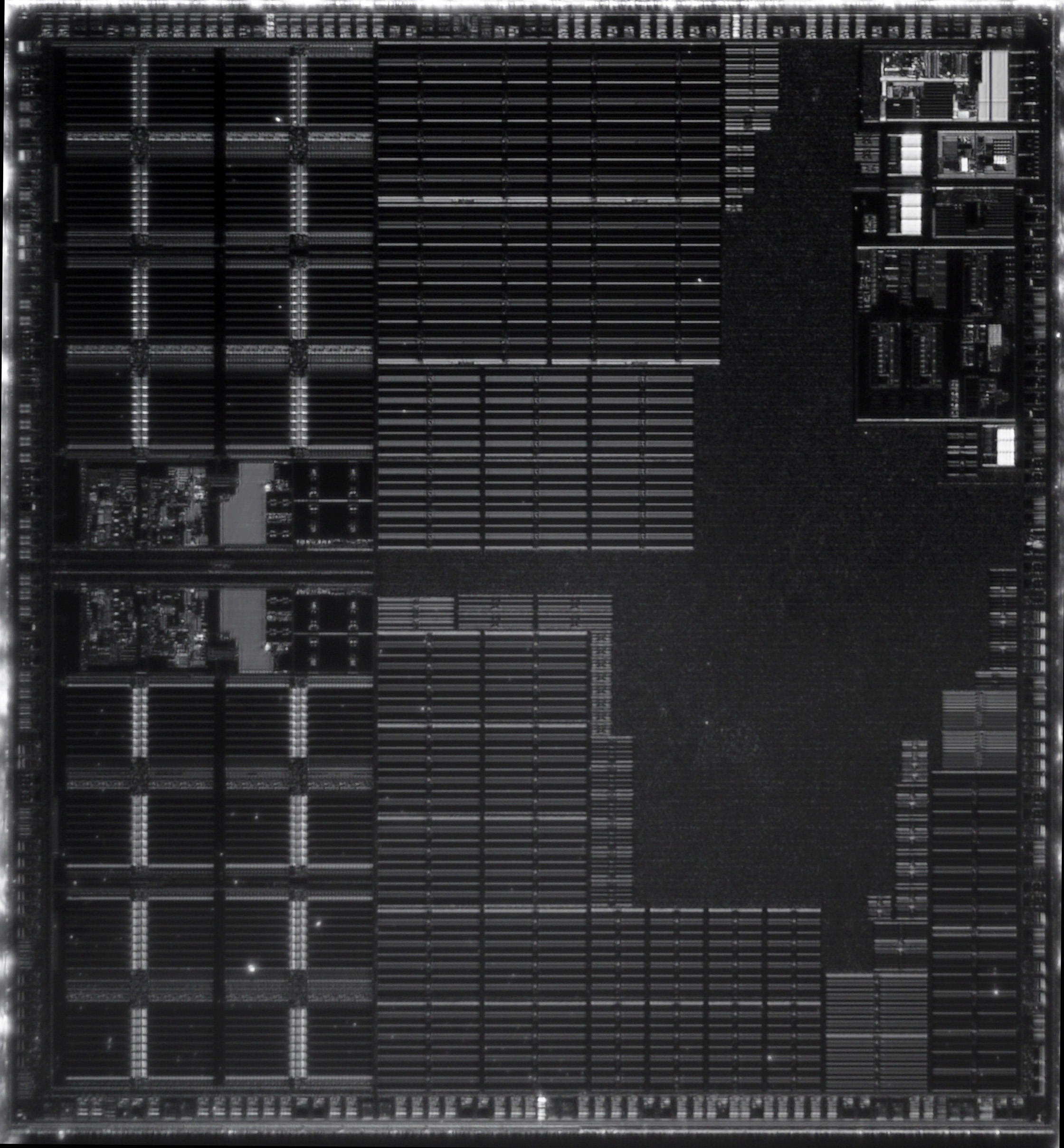
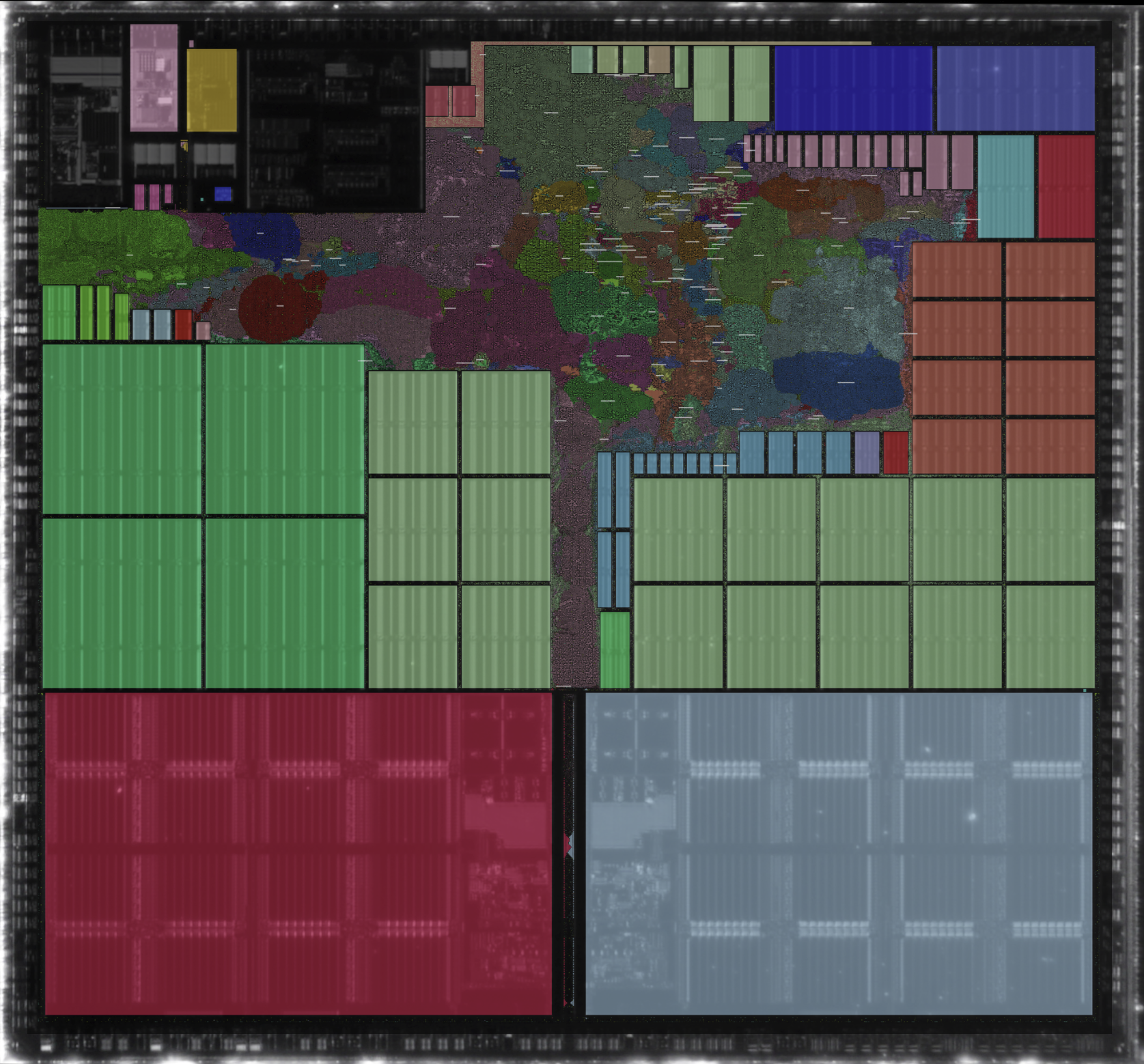
- "Block level" confidence in a chip's construction
- Number, size, and location of RAM & ROM macros
- Eliminates the most common classes of supply chain attacks compared to uninspectable chips
- ✅ Detects fake chips (cost of attack: <$10 - $100)
- ✅ Detect additional chips in package (cost of attack: $100 - $100,000)
- ❌ Does not detect minor mask tampering (cost of attack: > $100,000)
- Possible because we share reference images of the chip & RTL-level design source
Baochip Is Specifically Packaged to Facilitate this Type of Inspection
Just Because We Shared the Source Code
Doesn't Mean We Play Nice
Or, Red-Teaming the Red team:
Playing for Team Infra-Red
Example #1: Physical Readout Attacks
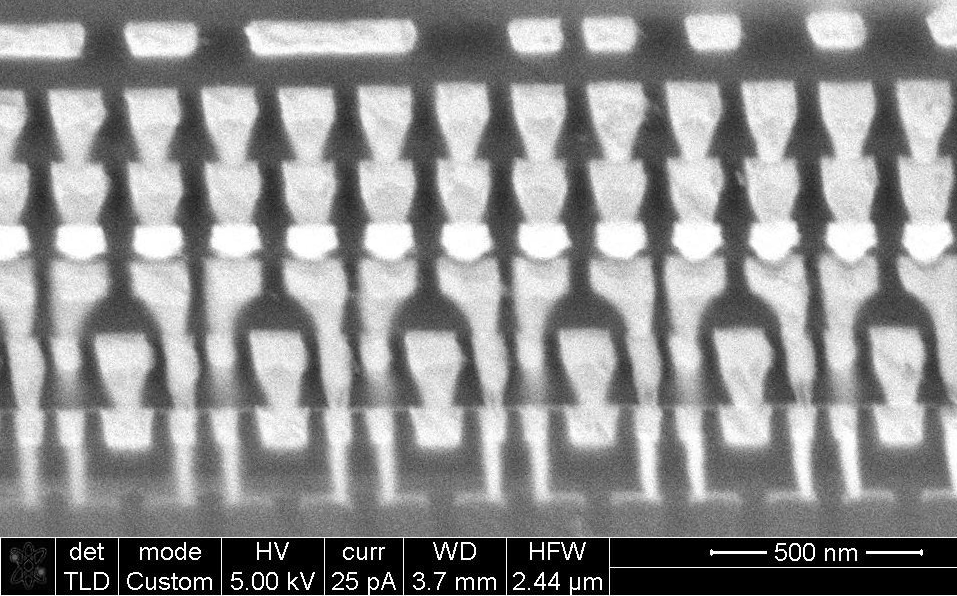
Fail Sec Labs (https://sec.fail)
- Data is stored in RRAM: a filament in a thin film of HfOx/TaOx
- Read-out is imagined to be difficult
- Storage filament is on the order of a couple atom's width
- Attack hypothesized as:
- De-layer to metal above the storage layer
- Read-out based on differential SEM leakage
Frustrating the Red Team
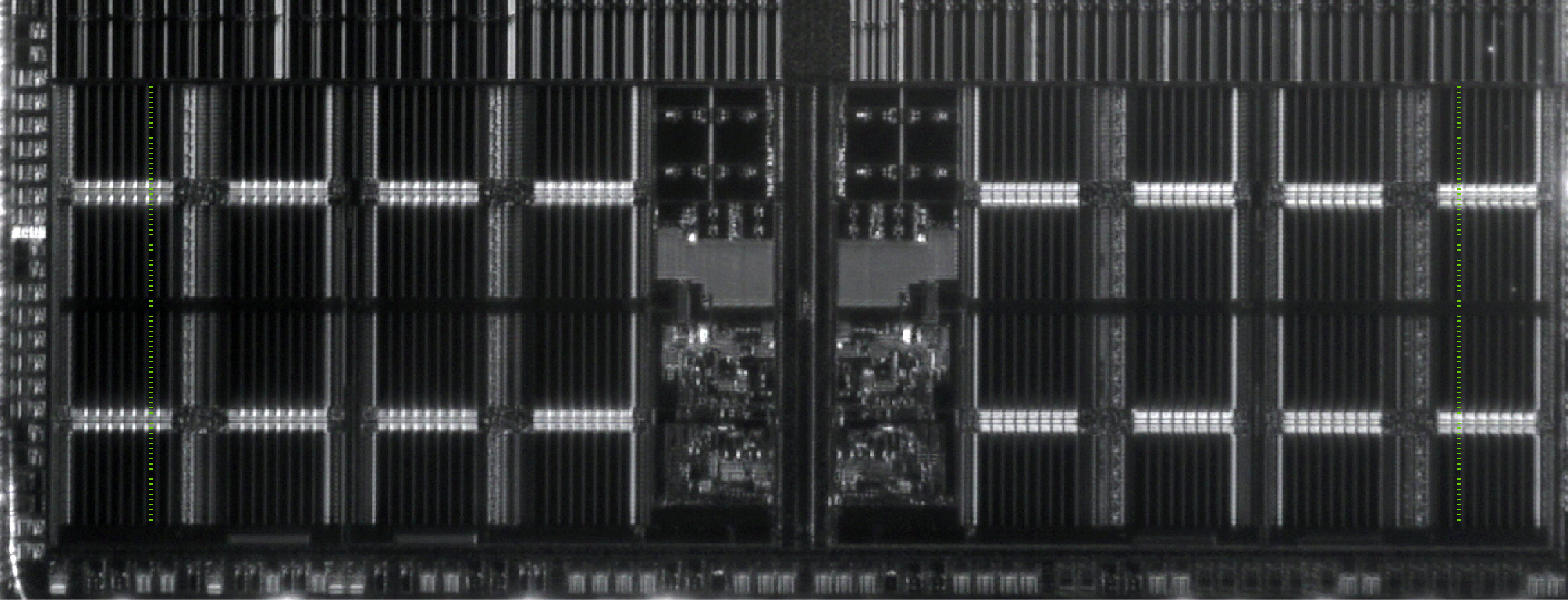
- Derive master key by hashing ~64kbits of material
- Hashes are "cheap"
- Storage is plentiful in 22nm
- If imaging 256 bits costs $1,000, recovering 64 kbits costs $256,000
- Stripe key on both edges of the RRAM array
- Requires de-layering planarity to within 5ppm accuracy
- Requires uniform read-out accuracy >97% (ECC can correct 2 bits per 128 bits)
- Increase the risk of total loss so that this is not an attractive strategy
- Additional 32 kbits "chaff" (XOR in random permutation then hash) to frustrate SCA
Example #2: Volatile Keys
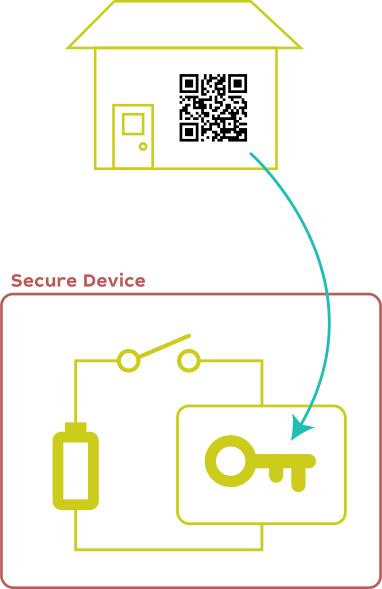
- Side channel attacks typically require many samples
- Sampling is considered to be a "zero cost" operation
- Use system-level tricks to increase the cost function of repeated sampling
- Battery-backed SRAM key included as part of root key KDF
- Key erased on reboot, time-out, or on command
- System includes a QR-code scanner for convenient high-entropy input
- Architectural trick that would be impossible to consider on closed-source security chip
- Side benefit: evidence is not destroyed
- Ciphertext is still in the device and recoverable
- Key is in your home - obtainable with a lawful warrant
- "Warrant key"
Open TOEs Have More Degrees of Freedom
- Being open does make it easier to know where to attack...
- ...but being open gives us more degrees of freedom to respond to attacks!
- No longer a turn-based game of defender vs attacker
- Anticipate, learn, and respond to attackers in real time
Empowering a Community
Create Community Spaces
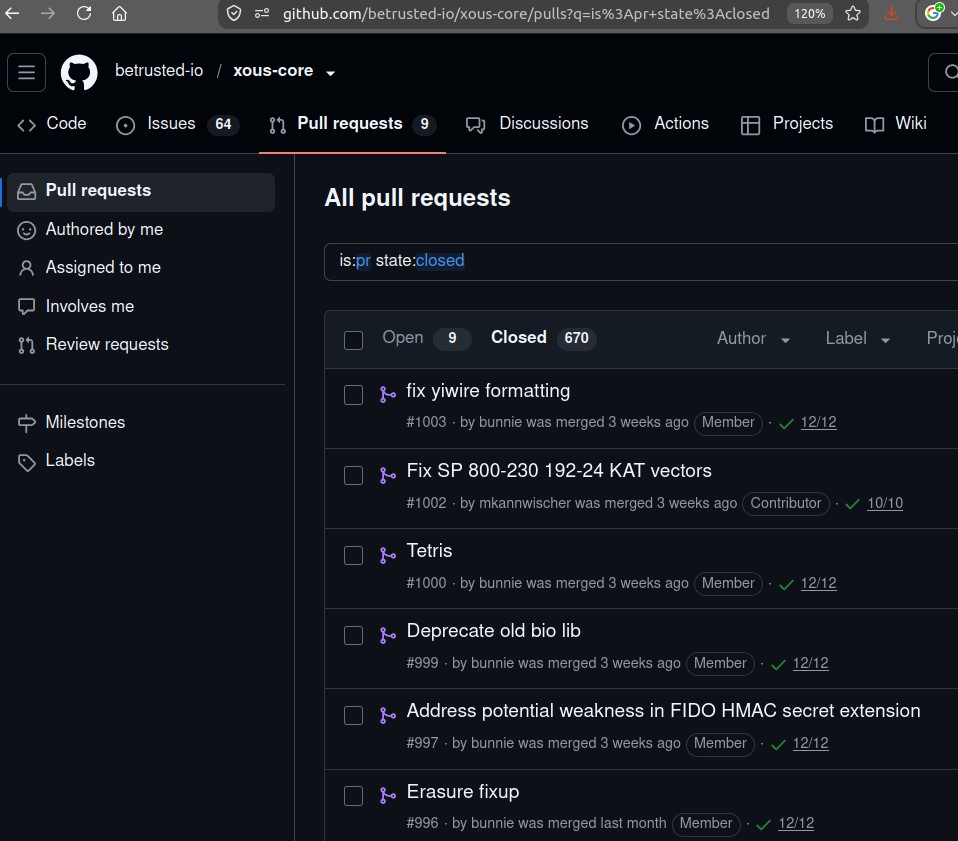
- Spaces like Github allow for pull requests, issues, code sharing
- Multiple repos:
- xous-core: Bootloader, OS,
applications
https://github.com/betrusted-io/xous-core/ - baochip-1x: IC design
https://github.com/baochip/baochip-1x
- xous-core: Bootloader, OS,
applications
Create Community Spaces
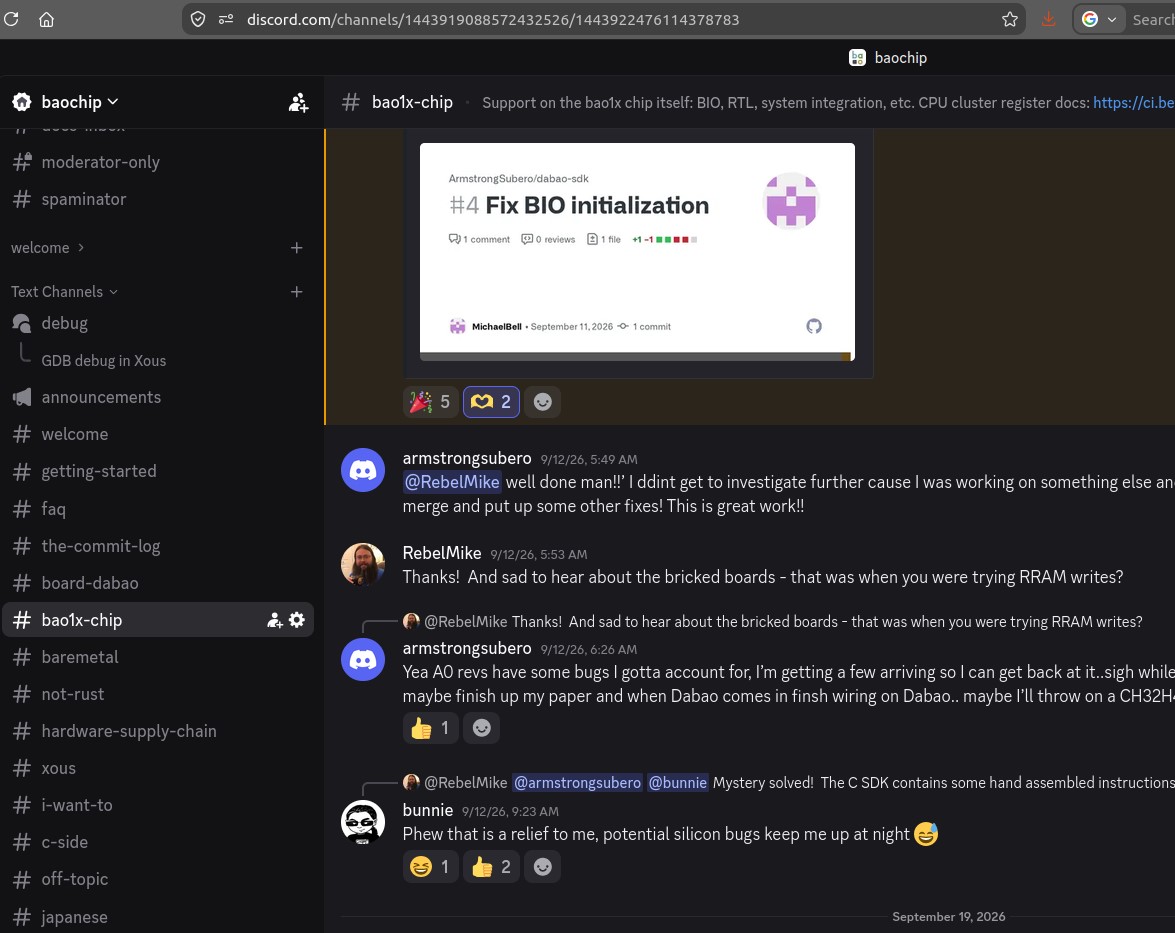
- Spaces like Discord allow for Q&A and live discussion
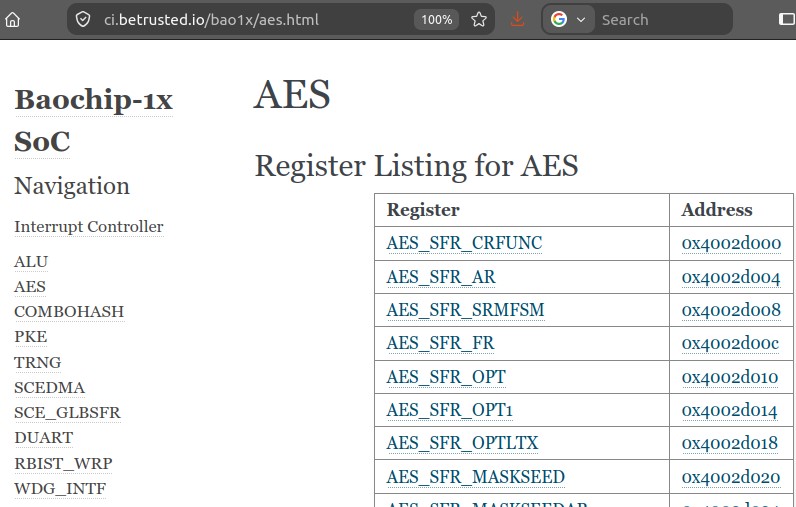
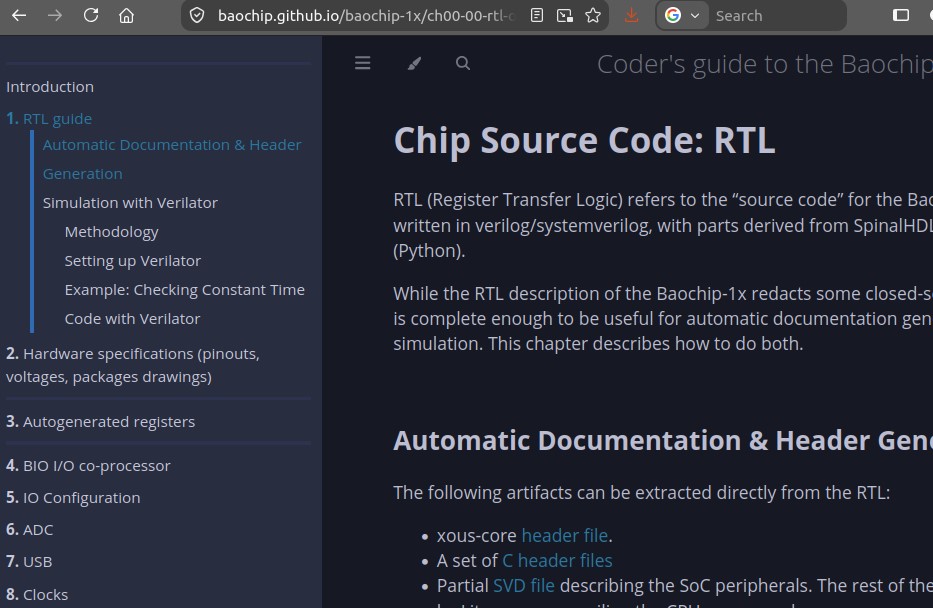
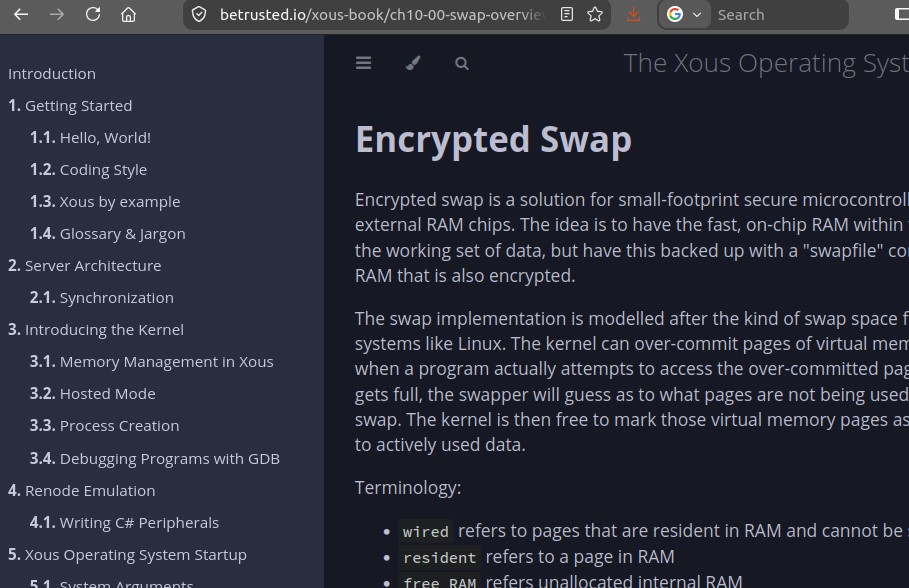
Create Lots of Documentation
Create Accessible Tooling
- RTL simulations run in verilator inside Podman (Docker) container
- Waveform tool runs in browser
- Minimize friction of traditional software engineer to access hardware tools
Create Accessible Tooling
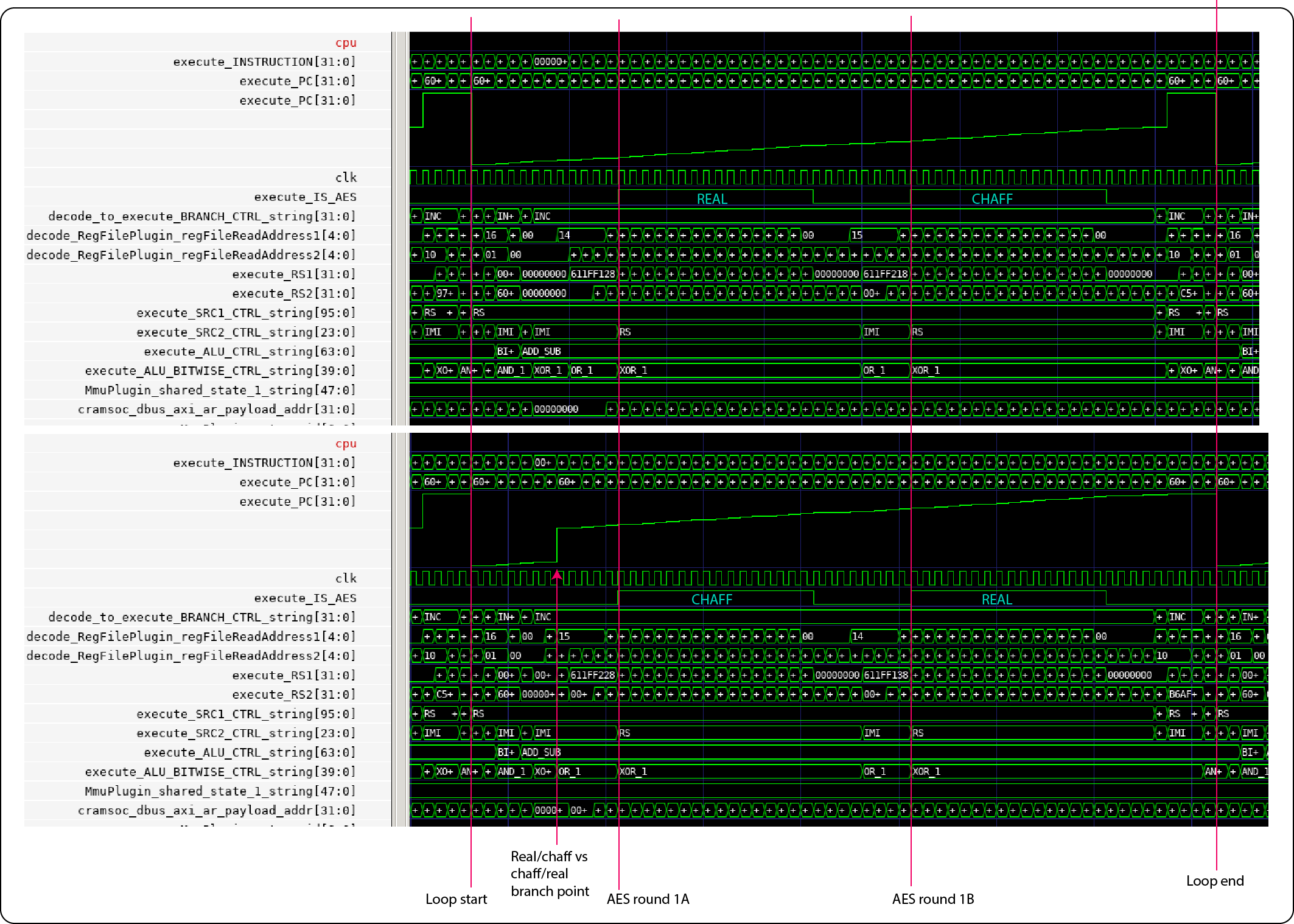
No More Cycle Counting:
Simulate to Confirm Constant Time
Run Continuous Integration
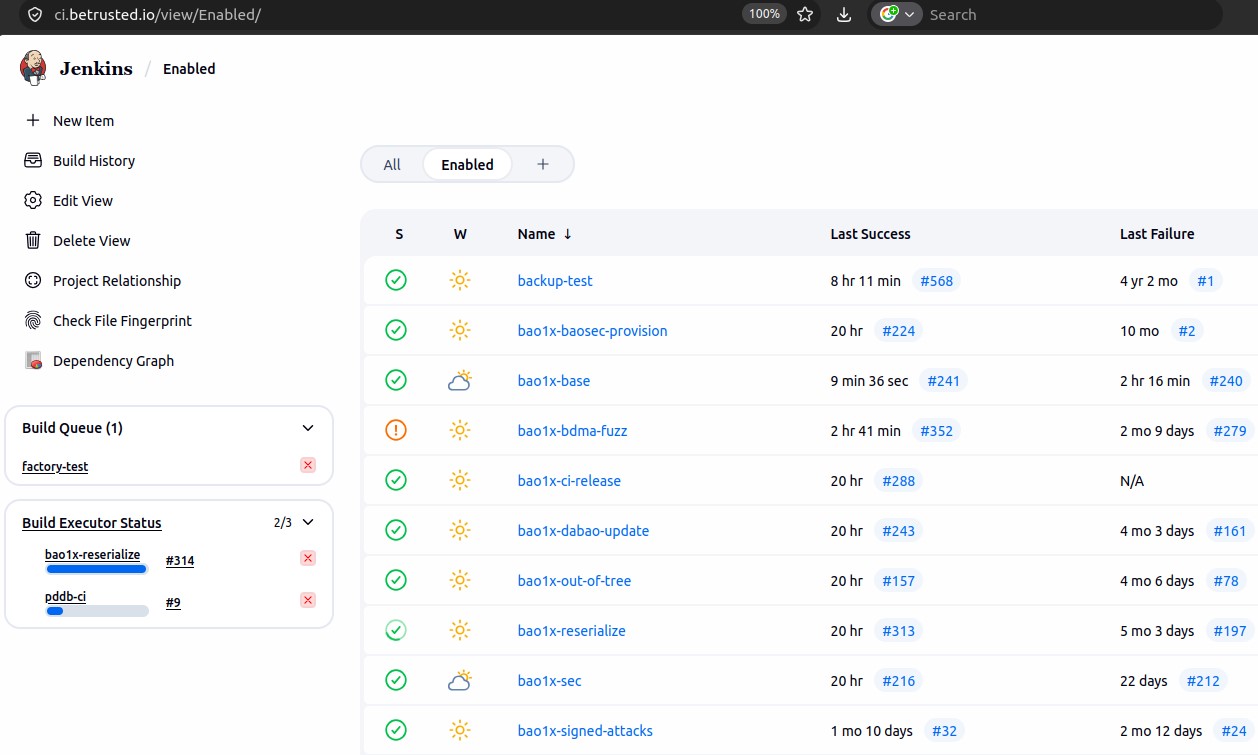
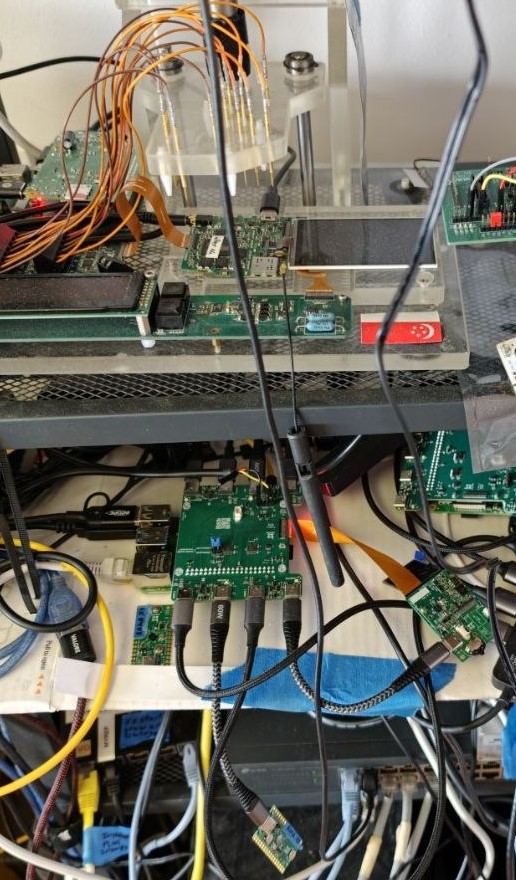
- "Hardware In Loop" (HIL) CI: changes are run on actual hardware
- Include some basic "red team" tests in the bench
- Update tests as new vulnerabilities are discovered and patched
- All my frameworks are open source, talk to me if you want tips on how
WIP: Make Side Channel Research Reproducible
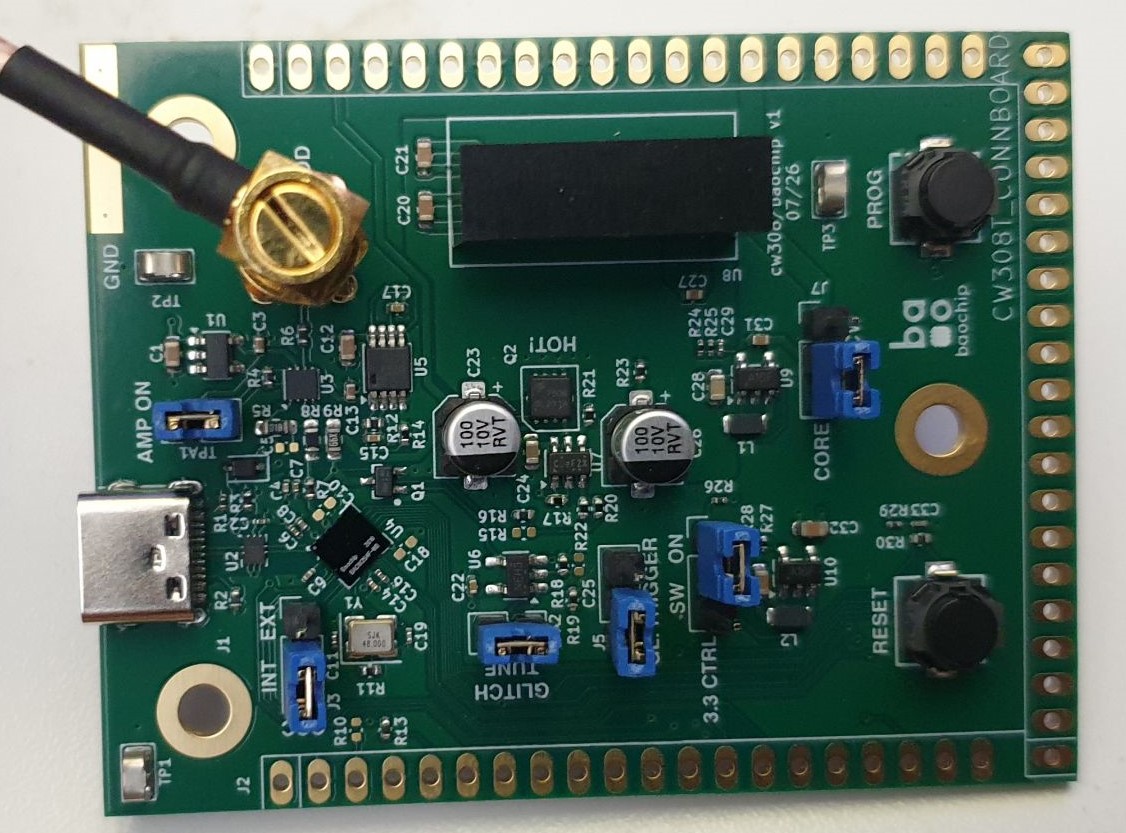
- "Official" side channel analysis board for Baochip
- Chipwhisperer-compatible form factor
- Built-in 20x 400MHz Δ-Idd amplifier
- Glitch crowbar
- Open source
- Goal: orderable by anyone via JLCPCB
- Stretch goal: integrate data acquisition hardware for turn-key setup
- The dream: integrate to HIL CI bench
- Users can submit mitigation patches and trigger SCA remotely
- Results can be reproduced/compared across groups & labs
- Maybe we can establish an "uncommon criteria" based on reproducible open source benchmarks?
- https://github.com/baochip/cw308t-baochip
Towards Openness and Transparency in Cryptographic Hardware
Let's Make Hardware Trustable Together!
Coming soon:
a Baochip hardware security token "Baosec"
Parts will be in mass distribution by end of year
baochip bluesky:
@baochip.com
bunnie bluesky:
@bunnie.org
Or join the Baochip Discord!
Slides at https://baochip.com/ches26
(CC-BY-4.0 except some images are CC-BY-SA)
https://discord.gg/YTCTZBTPNa